Mercy Ehinmodu
The National Coordinator Emergency Centre for Transboundary Animal Diseases Food & Agriculture Organisation of the United Nations, Dr Ayodele Majekodunmi
said globally, about 4.95 million deaths has been associated with AntiMicrobial Resostance(AMR).
While noting that the figure is expected to double to 10 million deaths a year by 2050.
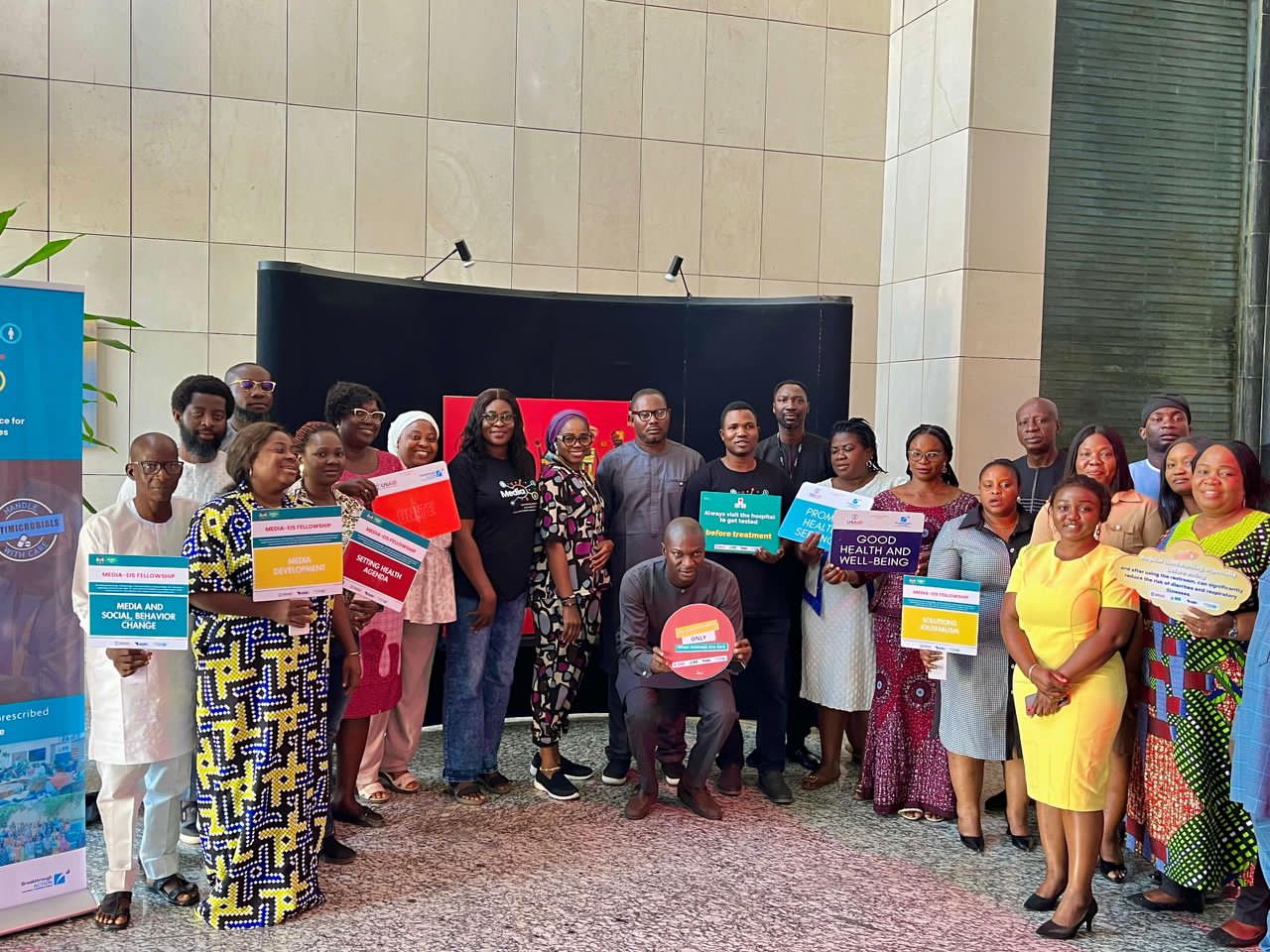
She made the disclosure at a Step-down training for members of the Association of Nigeria Health Journalists (ANHEJ)
convened by Ojoma Akor, a Media-EIS fellow, with support from the USAID-funded Breakthrough ACTION-Nigeria.
According to the Medical Expert, AMR could have negative impact on healthcare system, economy, and socioeconomic development.
“AMR can lead to treatment failure ,higher morbidity & mortality, financial losses in agriculture, longer hospital stay, more expensive antibiotics and treatment procedures.
She noted that Antimicrobial resistance (AMR) occurs when viruses, fungi, bacteria or parasites adapt over time and stop responding to antimicrobials, making infections more difficult to treat.
“Antimicrobial resistance AMR is propagated by Overuse of antimicrobial medicines, misuse of antimicrobial medicines , inadequate hygiene and preventive care, and poor-quality medicines.
Dr Ayodele said it is more pertinent to acknowledge the powerful role the media plays in shaping attitudes, influencing social norms, and driving behavior by integrating Social and Behavior Change Communication (SBCC) principles.
“The media can effectively engage audiences and foster positive changes in behavior and societal norms.
They can leverage SBCC through audience Centre Messaging by tailoring content to meet the specific needs and contexts of target audiences through storytelling and narrative power.
They can present positive behaviors as achievable and desirable.”
The Convener Ojoma Akor reiterated the importance of journalists, understanding the concept of Epidemiology .
“When Journalists fully understand scientific information about Epidemiology, they can translate it to the public especially during disease outbreak.
The Resident Advisor Media Epidemiology Infodemic Management Social Behavior Change Fellowship Programme (Media- EIS), Dr Olayinka Umar Farouk disclosed that the first cohort is set to graduate in December.
“Plans are underway to expand the fellowship and enhance the skills gained during the programme.
The medical expert reteirated the need for media experts to be well informed so as improve health outcomes in the
“The programme’s success is reflected in its focus on real-world application, as teams tackled specific diseases to translate knowledge into action.
The programme since its intiation in 2022, has achieved remarkable achievements including participation in outbreak response efforts”.


