Bukola Afeni
The United States Centers for Disease Control and Prevention and other partners have affirmed their support towards improving Acute Febrile Illness (AFI) Surveillance in Nigeria.
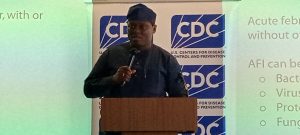
The Senior Public Health Specialist for Epidemiology and Surveillance at US CDC Nigeria, Dr. Oladipupo Banji Ipadeola, made the disclosure at a media roundtable in Abuja.
He added that effective surveillance of AFI will aid in identifying and controlling the root causes as well as protecting public health.
Ipadeola further highlighted that AFI surveillance is crucial for early detection and response to infectious diseases, particularly when patients do not respond to initial treatment.
According to him, the US CDC is collaborating with the Nigerian Centre for Disease Control and Prevention (NCDC) and other partners to implement AFI Surveillance in Nigeria.
“We have a network of six healthcare facilities across Nigeria’s six geopolitical zones, monitoring AFI cases and detecting disease trends. Through our disease surveillance, we have been able to track nine epidemic-prone diseases, including dengue, chikungunya, yellow fever, Lassa Fever, Monkey Pox, Zika, West Nile Virus, SARS-CoV-2, and malaria,” he said.
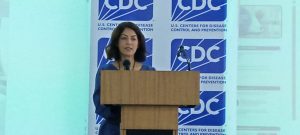
The Program Director of the Division of Global Health Protection, U.S. CDC Nigeria, Dr. Farah Husain, emphasized the need for media practitioners to ensure that accurate and timely information reaches the public.
She highlighted the importance of building a sustainable system in Nigeria for improving disease detection, laboratory capacity, and data management to respond better and faster to outbreaks.
IHVN IRCE Executive Director, Professor Alash’le Abimiku,said it is essential for everyone at all tiers of government to collaborate and come together to improve AFI surveillance in Nigeria.
“We want to pass information to people at the government level. We also engage in peer-to-peer mentoring and leverage evidence-based decision-making in securing support and resources for public health initiatives.”
She expressed commitment towards building the capacity of existing laboratories to detect and diagnose various diseases, including HIV, dengue, Lassa fever, and others.