Bukola Afeni
The Chief Executive Officer of Elohim Foundation, Dr. Julius Ibecheole, has identified critical gaps in Nigeria’s inland waterways regulatory framework, warning that the existing system falls short of modern safety governance standards.
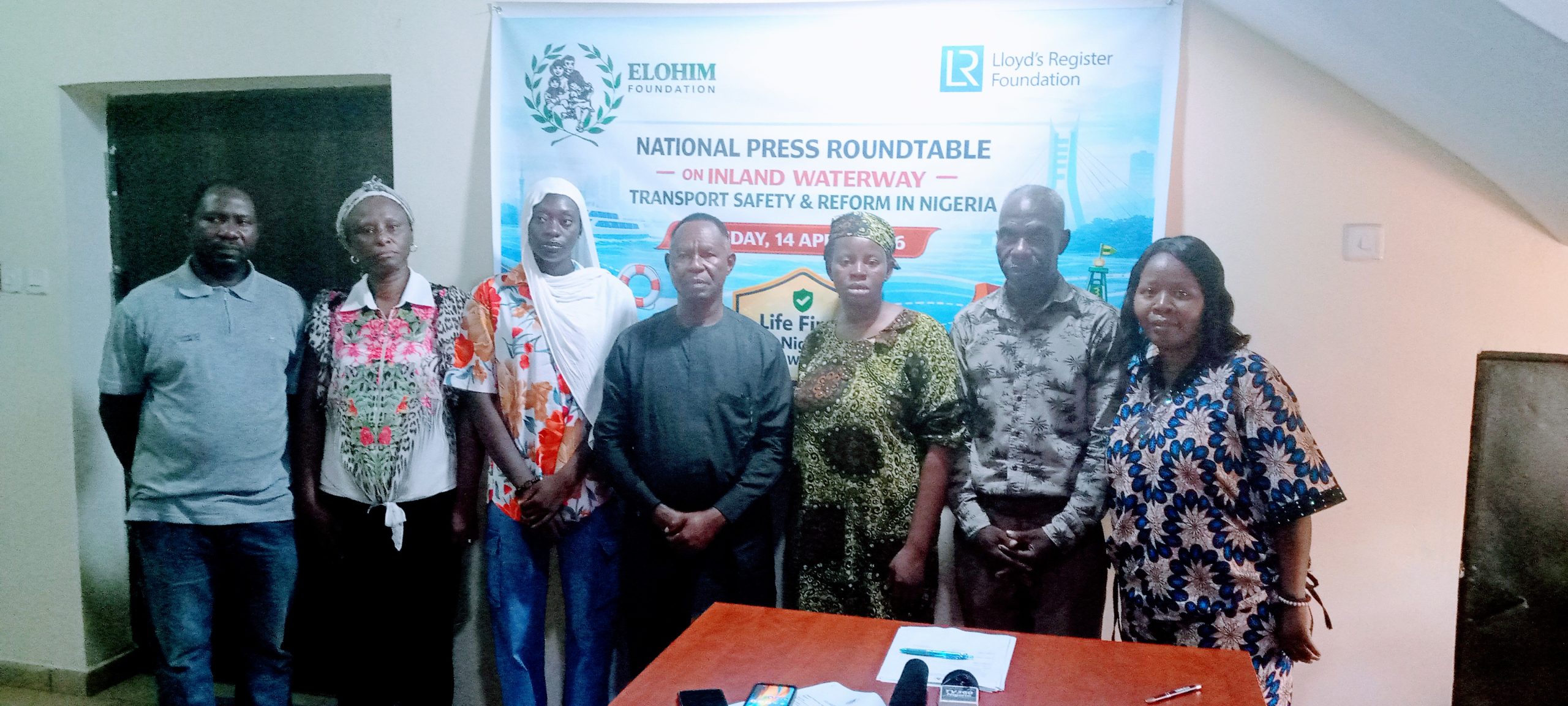
He made the disclosure at a media roundtable organised by ELOHIM Foundation, with support from Lloyd’s Register Foundation.
The CEO of Elohim Foundation highlighted that a comprehensive comparative review of the NIWA Act 1997 and the Inland Waterways Transportation Code 2023 reveals a structural mismatch between statutory mandate and modern safety governance requirements.
According to him, while the Act establishes regulatory authority and the Code outlines operational rules and penalties, both instruments are weakened by several deficiencies.
“The factors include weak safety-centric legislative framing, an outdated penalty regime, lack of independent accident investigation, absence of mandatory insurance, limited data-driven accountability, weak rural enforcement architecture, and inadequate professional and certification systems”.
He noted that the research, which spans from 2014 to 2025, shows that the shortcomings have contributed to “persistent and increasing inland waterways transport accidents in Nigeria.”
While highlighting solution, Ibecheole emphasized the need for structured licensing and certification of operators. “Licensing should be categorised, similar to what is obtainable in other sectors, and operators must undergo recertification every three years alongside competency examinations”.
He pointed out Lagos State as a model, noting that, “The state has supported local operators through cooperative clusters and provided boats, while also building standard jetties across the state.”
He contrasted this with other regions, stating that “in many parts of the country, particularly in the North Central and North East, passengers still wade through water to board boats due to the absence of proper jetties.”
On governance, Ibecheole called for a collaborative framework involving all tiers of government.
“There is a need for a joint governance structure that allows federal, state, and local governments, as well as community stakeholders, to play active roles in ensuring safety on inland waterways”.
He argued that relying solely on federal oversight would delay infrastructure development in riverine communities.
“If the federal government alone oversees inland waterways, it will take a long time for all communities to have the necessary facilities,” he added.
The Elohim Foundation boss further stressed the importance of stakeholder inclusion in policymaking.
“The National Assembly should not pass any bill on inland waterways without inputs from all stakeholders, including operators, communities, civil society groups, and sub-national governments”.
He concluded by calling for national recognition of boat operators and stronger coordination within the sector. “Operators and passengers are key stakeholders. Their voices must be heard in shaping policies that affect safety and operations”.
The Research Officer of the Elohim Foundation, Patrick Ijeoma, noted that insecurity and operational limitations significantly affected field activities in the course of the project .
“There were cases of kidnapping and piracy around some locations, particularly in Niger State , Anambra, and River State.”
He explained that the prevailing insecurity hindered the effectiveness of research assistants.
” The issues affected the inability of our research assistants to also take photographs, documentation, facts, and findings, because of the fear of arrest, a situation worsened by lack of proper security.
He further disclosed that questionnaires were administered across five states of the research location.
The Research officer highlighted that capacity building formed a core component of the project.
” We selected 18 boat operators and nominated them for training, which is aimed at enhancing operators’ knowledge and operational standards within inland waterways.
On stakeholder engagement, Ijeoma revealed that the project strengthened collaboration within the sector.
“We were able to establish good collaboration and partnership with Lagos State Water Authority and also with the National Inland Waterways Authority,(NIWA)” .
He also pointed to institutional gaps, stressing “lack of effective implementation of rules and regulations by the regulatory agencies.
” The Elohim Foundation, through the research, aims to develop advocacy tools that will drive policy reforms and improve safety standards across Nigeria’s inland waterways sector.
The project, implemented over a nine-month period, covered five states including Adamawa, Anambra, Niger, Rivers, and Lagos.


