Bukola Afeni
The Senior Special Adviser to the President on Health, Dr. Salma Anas-Kolo, has emphasized the need for state government and local government to prioritize the wellbeing of citizen particularly women and girls by strengthening collaboration with civil society organisations.
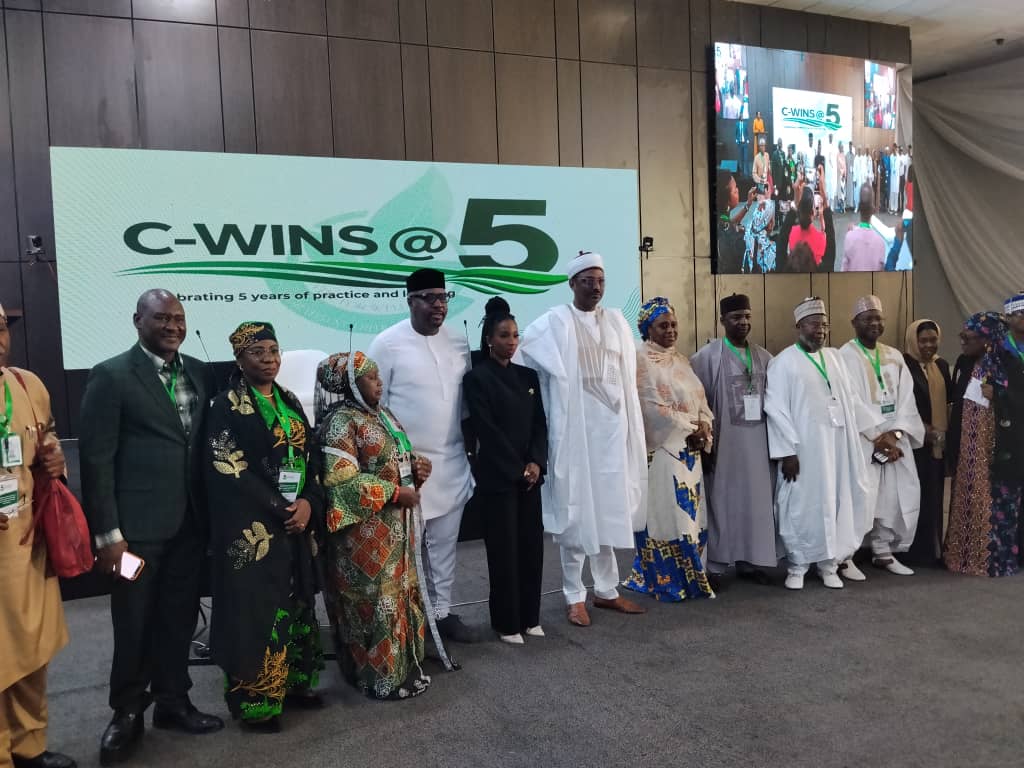
Speaking at the fifth anniversary celebration of the Centre for Women’s Health and Information (C-WINS), Dr. Anas-Kolo disclosed that when the wellbeing of women and girls is placed at the core of governance, partnership with civil society becomes both “natural and necessary.”
She noted that Nigeria is currently navigating complex economic, social, demographic and climate-related challenges, making it essential for government and non-state actors to work together.
“Today the country is navigating complex economic, social, demographic, and climate-related pressures. These realities demand not only strong government leadership but an ecosystem where civil society has the space, legitimacy, and support to contribute meaningfully to governance and wellbeing,” she said.
Dr. Anas-Kolo outlined key shifts needed to strengthen the ecosystem, including redefining civil society as co-architects of solution rather than just implementers, and encouraging state and local governments to focus more intentionally on measurable results.
“First, we must embrace civil society as co-architects of solutions, not mere implementers or advocates.
Their proximity to communities provides powerful insights that strengthen policy design, service delivery, and accountability.
“Secondly, state governments and LGAs must become more intentional about results. When citizens’ wellbeing, especially that of women and girls, is placed at the core of governance, partnership with civil society becomes both natural and necessary.
She stressed that issues affecting women are not merely health concerns but human rights issues.
“We need you to keep the pressure on. The challenges facing our women, from maternal mortality to gender-based violence, are not just health issues; they are human rights issues.
Dr. Anas-Kolo also highlighted the need to invest in trust, saying that collaboration built on transparency among government, partners and civil society always yields better outcomes.
“Lastly, we must invest in trust. C-WINS and the other few notable organizations leading collaborative work in this space demonstrate that when government, development partners, and civil society work with transparency and shared purpose, progress becomes inevitable,” she said.
Dr. Anas-Kolo urged civil society organisations (CSOs) like C-WINS to remain active watchdogs, ensuring that resources dedicated to Reproductive, Maternal, Newborn, Child, Adolescent, Elderly Health and Nutrition (RMNCAEH+N) reach the communities that need them most.
He reaffirmed the Presidency’s commitment to building a functional health ecosystem in line with President Bola Ahmed Tinubu’s Renewed Hope Agenda, adding that civil society must remain vibrant, organized and professional to drive progress.
The Chairman of the Board of Trustees of the Child Welfare and Immunization Support Initiative (C-WINS), HRH Samaila Mera, Emir of Argungu, outlined the organisation’s key health achievements.
The Emir noted that C-WINS has transformed into a structured organisation implementing programmes that address Nigeria’s most pressing health and nutrition challenges.
He stated that through coordinated advocacy and technical support, C-WINS played a significant role in the Measles Rubella vaccine introduction campaign, which successfully reached 56 million children nationwide with a 99 percent coverage rate.
HRH Mera further highlighted that the organisation has advanced integrated child survival initiatives across 145 Local Government Areas, supported digital health solutions for community-level services, strengthened the cold chain system through innovative approaches, and expanded access to nutrition and primary healthcare services across multiple states.
According to him, the milestones reflect C-WINS’ clear vision to support communities, strengthen health systems, and increase access to essential services for children and families.
He expressed appreciation to government partners for providing an enabling environment that has allowed the organisation’s initiatives to thrive.
“I appreciate all stakeholders for the partnerships that continue to guide C-WINS in designing solutions rooted in evidence and community needs, and for the trust that allowed C-WINS to find its footing and stay focused on its mission,” he said.
The Director of Nutrition at the Federal Ministry of Health and Social Welfare, Dr. Ladidi Bako, underscored the need to elevate community voices, especially women and youth, in shaping nutrition programs.
She outlined a series of strategic actions the Federal Government plans to adopt to advance nutrition and equity across Nigeria.
Dr. Bako said the government remains committed to deepening multi-level governance and improving financing for nutrition, noting the need to strengthen state and LGA coordination platforms and integrate nutrition into annual budgets across key ministries such as health, agriculture, education, and social protection.
She emphasized the importance of tracking not just commitments but actual releases and spending on equity-focused nutrition interventions.
According to her, civil society groups like C-WINS play a critical role by supporting budget analysis, accountability dialogues, and citizen monitoring.
She further stressed that Primary Health Care (PHC) systems must remain central to delivering equitable nutrition services, as PHCs serve as the frontline for community access.
She said government is committed to ensuring that every PHC provides a minimum package of nutrition services, including growth monitoring, counseling, micronutrient supplementation, and management of acute malnutrition.
She also highlighted the need to leverage health campaigns, community health workers, women’s groups, and faith-based institutions as trusted messengers.
Speaking on food security, Dr. Bako said government is prioritizing strategies to align food systems with nutrition and climate resilience, adding that Nigeria must support farmers with localized climate information, improved extension services, soil health education, crop diversity, and early-warning systems that link climate alerts to nutrition and social protection responses.
On data and technology, she said equity requires better use of disaggregated data by location, gender, wealth, displacement status, disability, and age to identify populations being left behind.
She added that digital tools would help strengthen monitoring and ensure targeted delivery of services.
Dr. Bako noted that C-WINS’ partnership with religious and traditional leaders on immunization and nutrition already offers a strong foundation for nationwide scale-up.