Yemi Obafemi
As thousands of Nigerian mothers continue to die from preventable nutrition-related complications, the Federal Government says it is intensifying efforts to curb maternal malnutrition through strengthened policies and nationwide training of health workers.
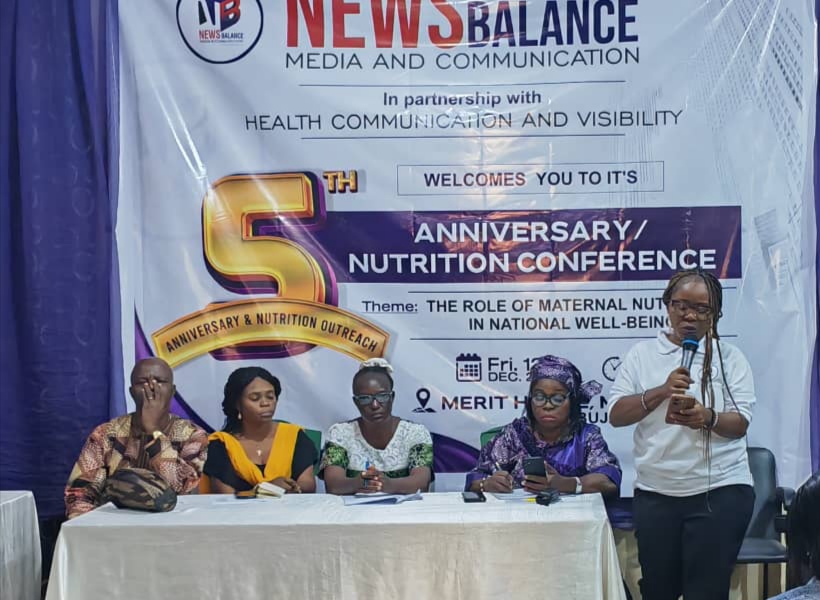
This assurance was given at the 5th Anniversary of News Balance and Media Communication held in Abuja, where the Federal Ministry of Health reaffirmed its commitment to tackling malnutrition across the country.
The Director of Nutrition, Dr. Ladidi Bako, who was represented by Pharma. Orume Beatrice said maternal nutrition remains a top priority for the Ministry because of its direct impact on maternal survival and child development.
“Maternal nutrition has remained an important focus for the Ministry because of its direct impact on maternal survival and child development,” she said.
She explained that the government has established several strategic policies such as National Policy on Food and Nutrition, National Strategic Plan of Action for Nutrition,Maternal, Infant and Young Child Nutrition (MIYCN) Guidelines, Micronutrient Deficiency Control Guidelines, Reproductive, Maternal, Newborn, Child and Adolescent Health (RMNCAH) + Nutrition Strategies
Nigeria Child Survival Plan, Basic Health Care Provision Fund (BHCPF), Child Nutrition Fund (CNF)
According to her, health workers nationwide have been trained on MIYCN standards, micronutrient supplementation, complementary feeding, antenatal nutrition, and routine facility assessments.
She added that the government implements multiple micronutrient supplements (MMS) rollout, iron and folic acid programs, and malaria prevention in pregnancy, in addition to Baby Friendly Initiative activities and community-level nutrition counseling.
Orume noted that enforcing these initiatives relies on continuous monitoring.
“We ensure implementation through digital reporting, routine supervision, and community-based reviews. We do not leave monitoring behind.”
She also highlighted the role of data-driven approaches, noting that the Office of the Vice President and the Nigerian Governors Forum track state-level nutrition performance.
The Ministry, she said, continues home visits through its maternal and newborn outreach programs, administering vitamin A, providing supplements for mothers and children, and mobilizing communities.
The President of the Nutrition Society of Nigeria (NSN), FCT Chapter, Major Nwachinmere Edith, represented by Mrs. Oyegunle Adeola, warned that poor maternal nutrition feeds a cycle of malnutrition in Nigeria.
“A malnourished mother gives birth to a malnourished child, who becomes a malnourished adolescent and ultimately a malnourished adult. This cycle produces a malnourished nation,” she said.
She identified poverty, food insecurity, cultural beliefs, and poor antenatal attendance as major drivers of maternal malnutrition.
Adeola noted that many pregnant women start antenatal visits only at eight months, missing critical nutritional support needed throughout pregnancy.
She highlighted key NSN efforts, including: Grand Challenges Nigeria Project, NSN Strategic Plan (2022–2024) Maternal Infant Young and Child Nutrition (MYCIN) Programme.
She emphasized the significance of proper breastfeeding techniques, noting that many babies latch incorrectly, reducing the nutritional benefits of breast milk.
Adeola stressed that the media is essential to disseminating accurate nutrition information
“Without the media, mothers will not get the right information. Nutrition sciences must be broken down into simpler messages that women can easily understand.”
She urged the media to promote success stories of nutrition programs,Conduct radio/TV nutrition campaigns
,Hold government accountable for funding nutrition commodities,Combat cultural misconceptions (e.g., myths discouraging eggs or snails for pregnant women)
,Support behavioural change communications.
Contributing to the panel, Judith Ugbodu, Program Manager, NOIPolls, said socioeconomic and cultural barriers must be addressed using relatable storytelling and sustained public education.
“Media must highlight real stories about nutrition challenges and teach the younger population the importance of balanced diets,” she said.
She stressed that campaigns targeting adolescents are essential, as many are influenced by junk food advertising.
The Team Lead of News Balance Media, Bukola Afeni, announced that the organization has taken direct action by visiting two Internally Displaced Persons (IDP) camps in Abuja, providing maternal and child nutrition support.
Afeni urged government and stakeholders to prioritize maternal nutrition as a national development issue.


