Bukola Afeni
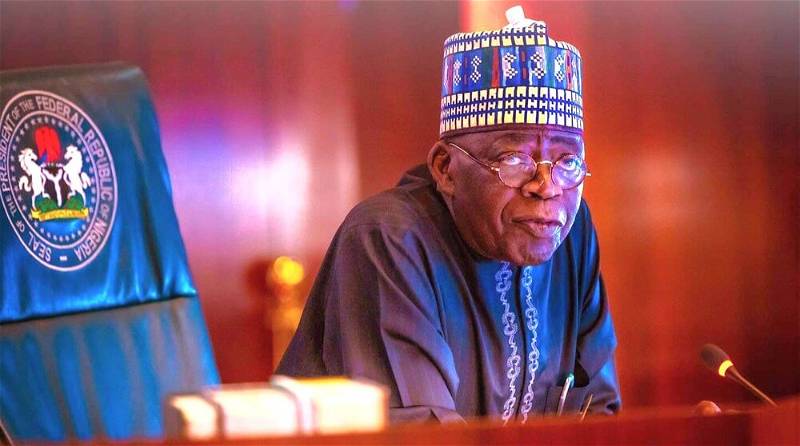
President Bola Ahmed Tinubu on Friday said Nigeria has begun recovering from years of economic instability, declaring that difficult reforms introduced by his administration have started yielding visible results across critical sectors.
Speaking during his nationwide address to mark the third anniversary of his administration, Tinubu acknowledged the hardship faced by Nigerians following the removal of fuel subsidy and foreign exchange reforms but insisted the decisions saved the country from economic collapse.
“At the height of the subsidy regime, Nigeria was spending as much as ₦18.4 billion daily to sustain petrol subsidies,” the President said. “The situation demanded urgent and courageous action.”
Tinubu said his administration inherited mounting fiscal pressures, rising debt-servicing costs, insecurity, declining revenues, and exchange-rate distortions that threatened national stability.
According to him, refusing to implement reforms would have pushed the country into “fiscal breakdown, worsening poverty, and severe economic uncertainty.”
The President stated that Nigeria’s economy is now more competitive and positioned for sustainable growth, citing improvements in public finances, investor confidence, and capital market performance.
He noted that the Nigerian stock market recorded significant growth, with market capitalisation rising from ₦30 trillion in 2023 to ₦160 trillion in 2026.
Tinubu also highlighted ongoing infrastructure projects across the country, including the Lagos-Calabar Coastal Highway, Sokoto-Badagry Super Highway, Abuja-Kaduna-Zaria-Kano Road, and the East-West Road.
“Over 2,700 kilometres of highways and major roads are under construction, reconstruction, or rehabilitation,” he said.
In the oil and gas sector, the President said reforms had attracted fresh investments and boosted local refining capacity, reducing Nigeria’s dependence on imported petroleum products.
He added that the government was investing in power infrastructure, renewable energy, and transmission networks to support industrial growth and economic expansion.
Tinubu further disclosed that over 1.5 million students had benefited from the Nigerian Education Loan Fund, while housing projects under the Renewed Hope Housing Programme were creating jobs and expanding access to affordable homes.
Despite the progress, the President admitted that many Nigerians were still struggling with the rising cost of living.
“We have not solved every problem, and we are not yet where we want to be,” he said. “But the foundation for recovery has been laid.”
Tinubu urged Nigerians to remain hopeful and united, saying the country was gradually regaining international confidence and moving toward long-term prosperity.