Bukola Afeni
The Federal Government said the government has expanded emergency care for women to reduce the financial barrier to Caesarean section when complications arise.
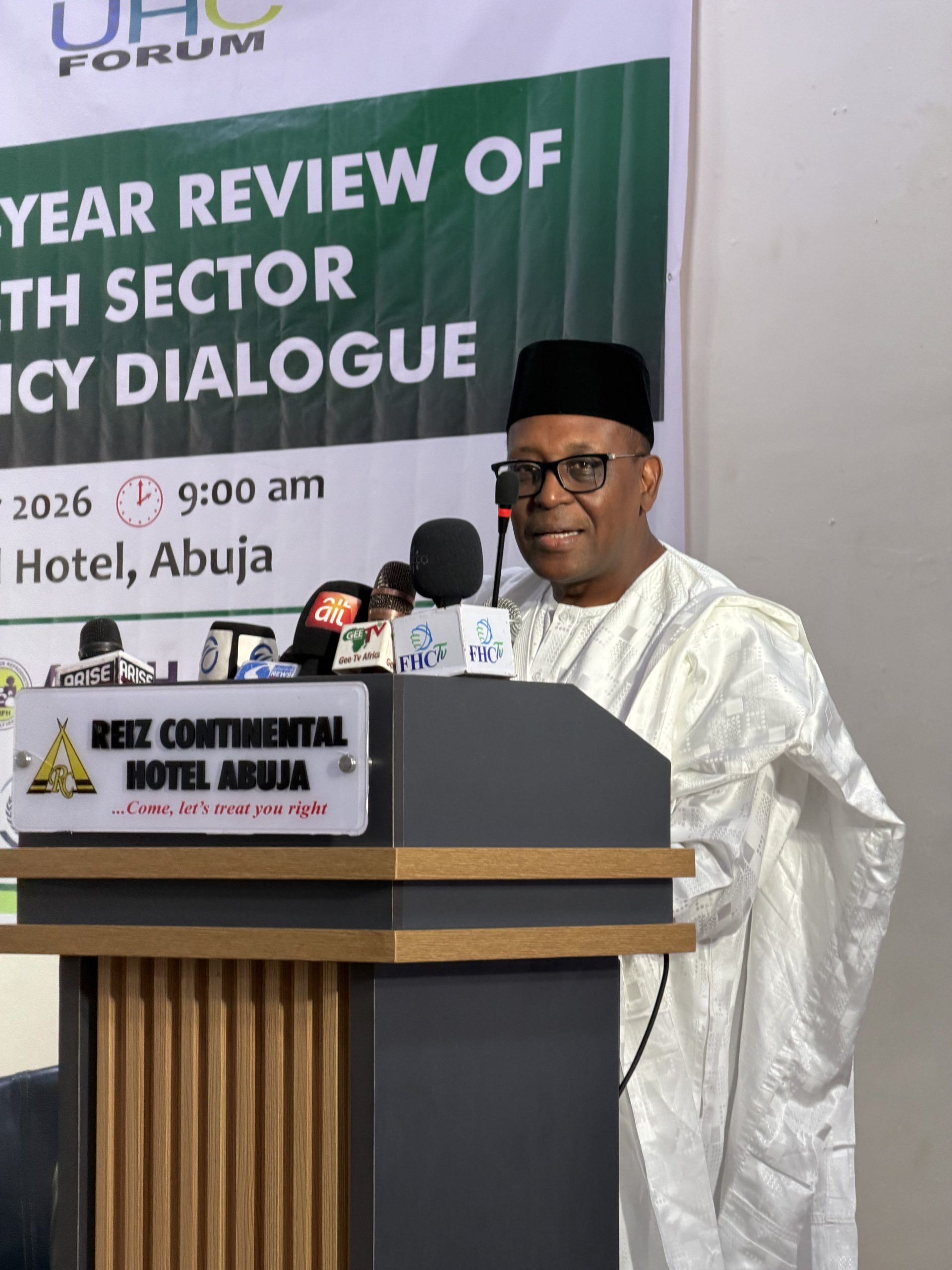
The Coordinating Minister of Health and Social Welfare, Prof. Muhammad Ali Pate, disclosed this at the mid-term review and policy dialogue on Nigeria’s health reform agenda organised by the Nigeria UHC Forum and the Health Sector Reform Coalition in Abuja.
He said the government had expanded emergency care for women, stating that it is no longer a barrier for women to have a Caesarean section.
Pate said the government had also upgraded hundreds of higher-level health facilities, reformed transfer centres and expanded emergency care for women.
“You cannot have the health care system that you want when you are spending seven dollars, ten dollars per capita or less.
“But even within that limited resources we prioritise to invest on the supply side, and the states will bridge the gap on the demand side.”
Pate said President Bola Tinubu has approved 79 new ambulances as part of the plan to deploy 400 ambulances nationwide.
On the health workforce, he said the government had increased the intake of medical students from 5,000 to over 10,000.
He added that nursing and midwifery schools in the states were also being supported to increase the number of health workers.
“We are putting resources in the hands of states that are able to invest in that infrastructure. So it is not just federal government,” Pate said.
The Minister said the Federal Government is working with states through quarterly performance dialogues, joint annual reviews and operational plans.
“We have operational plans in each of the states so that we are all working, and growing in the same direction,” he said.
Pate said three joint annual reviews had been conducted, with another scheduled for November.
He added that the State of the Health of the Nation report for 2025 and 2026 had also been put together.
He said the approach was intended to reduce duplication and ensure that government remained responsible for improving health outcomes.
“Ultimately putting the responsibility on government. Whether you get a donor or a partner, we appreciate them. But the responsibility for improving family planning, maternal health, is that of the government of Nigeria,” he said.
Pate also said the Presidential Initiative for Unlocking the Healthcare Value Chain is attracting domestic investment in medicines, vaccines, test kits and medical equipment.
“We have folks that are doing manufacturing for vaccines, test kits. There was no diagnostic kit manufacturer in the whole of sub-Saharan Africa, now we have at least three companies in Abuja,” the Minister added.
He said the government is also working with the National Health Insurance Authority on the regulation and payment of telemedicine services, while efforts are being made to address connectivity and power challenges.
“It takes time to build, we had no illusion that it was going to be easy. We are committed to start building the health system that Nigerians deserve,” Pate said.
The Chairperson of the Health Sector Reform Coalition, Nigeria, Dr. Muhammed M. Lecky, said the gains recorded under the health reform agenda must be protected, strengthened and translated into measurable improvements for Nigerians.
Lecky said the current reform agenda had provided a stronger framework for coordination among the Federal Government, states, local governments, development partners and communities.
He said civil society organisations welcomed progress in primary healthcare, health financing, immunisation, maternal and newborn health, health insurance, health industrialisation, power in health initiatives, emergency response and governance.
However, he said the reforms must be judged by whether they were sufficiently financed, institutionalised and implemented to produce lasting improvements in people’s lives.
On primary healthcare, Lecky said the next phase should focus on whether health facilities were functioning consistently rather than simply counting the number of facilities renovated.
He said functional primary healthcare centres should have health workers, essential medicines, basic diagnostics, electricity, water, infection prevention measures, referral systems, maternal and child health services and channels for community feedback.
On health financing, Lecky raised concerns over high out-of-pocket spending, delayed releases and fragmented funding.
“Health financing should therefore be judged not only by what is allocated, but by what reaches the frontline and what services those resources produce,” he said.
The coalition also called for greater attention to maternal and child health, nutrition and family planning.
Lecky cited the Nigeria Demographic and Health Survey 2023–24, which showed that 79 per cent of women received antenatal care from a skilled provider, while only 43 per cent had four or more antenatal care visits.
He said only 50 per cent of live births were assisted by a skilled provider, while 39 per cent of children aged 12 to 23 months were fully vaccinated with basic antigens and 14 per cent received no vaccinations.
He also cited the survey’s finding that 40 per cent of children under five were stunted, including 21 per cent who were severely stunted.
The Coalition said rural communities, poor households, conflict-affected populations, displaced persons and other hard-to-reach groups continue to face greater barriers to healthcare.
Lecky called for more targeted funding and better data at state, local government, ward and facility levels to identify and address those gaps.
He also called for better working conditions for health workers, timely payment, supportive supervision, rural incentives, training, career progression and transparent deployment.
On the National Health Act 2014, the coalition recommended an implementation matrix to identify gaps and overlaps in health policies and programmes, clarify responsibilities and track implementation.
Lecky also cited the Social and Citizen Accountability for Primary Health Care Performance project carried out by BudgIT and the Health Sector Reform Coalition across the 23 local government areas of Kaduna State.
He said the project showed that Ward Development Committees could help improve health facility performance, community mobilisation and advocacy when properly supported.
However, he said political interference, limited training, low awareness, weak institutional support and inadequate operational resources remained challenges.
On the Basic Health Care Provision Fund, Lecky said an analysis of 862 WDC meetings showed that only 11.6 per cent discussed the fund, with limited discussion of allocations, expenditure, procurement and retirement of funds.
“The lesson is clear, communities cannot effectively hold facilities accountable for resources they do not know exist,” he said.
The Coalition called for BHCPF to become a regular item on WDC meeting agendas and for communities to receive information on allocations and expenditure.
It also recommended stronger financial oversight by WDCs, community scorecards, town hall meetings and citizen report cards.
The Chair and Co-convener of the Nigeria UHC Forum, Chief (Mrs) Moji Makanjuola, MFR, said the mid-term review should examine whether the reforms could be sustained and continue to deliver results.
Makanjuola said attention should be paid to leadership, institutional capacity, community ownership, sustainable financing and accountability.
“Ultimately, the true measure of reform is not simply what is initiated, but what is institutionalised, sustained and translated into better health outcomes for Nigerians.”
She said the media had an important role to play in helping Nigerians understand health reforms, tracking government commitments and reporting implementation gaps.
Makanjuola said the Nigeria UHC Forum would use the 2027 election cycle to push health higher on the political agenda.
She said the Forum had developed a citizens-led health agenda during the 2023 election cycle and engaged political parties and candidates through dialogues and advocacy.
Makanjuola disclosed that a stakeholder workshop would be held in October with development partners, the Health Sector Reform Coalition and other stakeholders to review the citizens-led health agenda and develop an action plan ahead of, during and after the electioneering period.
Makanjuola also recalled that Pate had presented the government’s health reform blueprint to the Nigeria UHC Forum at the beginning of his tenure and subsequently recognised the Forum as a partner in implementing the National Health Sector Renewal Investment Initiative.
She said the Forum and the Health Sector Reform Coalition had also engaged government on the state of the health sector and the Health Compact signed in December 2023.
Makanjuola said findings from the Gates Foundation-funded Exemplar Analysis Project showed that progress was possible even with limited resources, but noted that improvements remained uneven across states.
“While we are elated to know that significant progress is possible even with limited resources, we are concerned that the uneven progress observed across the country is limiting national progress,” she said.
Makanjuola urged stakeholders to identify what was working, why it was working, where it was working and what was needed to sustain the gains.
Makanjuola called on civil society organisations to maintain a common position on health, strengthen citizen participation and demand greater accountability.
“A Nigeria where no man is oppressed is possible. Let us demonstrate it with equitable health access,” she said.

