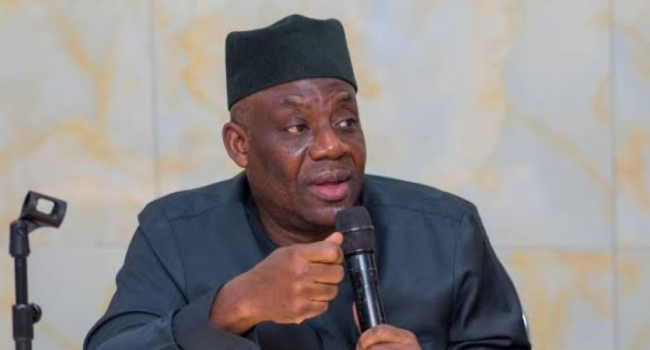
Yemi Obafemi
The Federal Government has announced plans to phase out the policy separating Junior Secondary Schools (JSS) from Senior Secondary Schools (SSS), citing overcrowding, underutilised facilities and rising school dropout rates.
Minister of Education, Dr. Maruf Tunji Alausa, disclosed this on Tuesday in Abuja while inaugurating the Universal Basic Education Commission (UBEC) Ministerial Implementation and Monitoring Committee for Smart Schools, Bilingual Schools and Alternative Schools.
Alausa said the proposed policy would be presented at the next National Council on Education meeting as part of broader reforms to expand access to education and improve learning outcomes nationwide.
He said, “The Committee’s performance would be measured by the number of schools that become fully operational and actively educating children,” stressing that every investment in basic education under the Renewed Hope Agenda must produce measurable results.
The minister explained that the Smart Schools initiative is designed to equip learners with digital skills for the modern economy, while the Bilingual Schools programme promotes linguistic inclusion, improved learning outcomes and national integration.
He added that the Alternative Schools initiative aims to expand access to quality education for vulnerable and underserved groups, particularly girls and out-of-school children.
Expressing concern over the slow implementation of several UBEC-funded projects, Alausa directed the committee to work with UBEC, state governments, State Universal Basic Education Boards (SUBEBs) and other stakeholders to ensure the timely completion and full operationalisation of schools through the provision of infrastructure, furniture, essential facilities and teachers.
Speaking on behalf of the Permanent Secretary of the Federal Ministry of Education, Director of Basic Education, Dr. Folake Davis, reaffirmed the ministry’s commitment to supporting the committee in delivering its mandate.
Executive Secretary of UBEC, Hajiya Aisha Garba, said 37 Smart Schools have been established nationwide, with 24 already operational, while 30 Bilingual Schools are being implemented across nine participating states under the UBEC-Islamic Development Bank partnership.
She added that the Alternative Schools Programme continues to provide flexible and inclusive learning opportunities for out-of-school children.
Responding on behalf of the committee, its chairman, Prof. Rashid Adewumi Aderinoye, pledged that members would carry out their responsibilities with integrity, professionalism and transparency to ensure government investments translate into sustainable, fully functional schools that improve learning outcomes for Nigerian child


