Bukola Afeni
The Federal government has reaffirmed its commitment to ensuring that all citizens have access to quality healthcare services, regardless of their socio-economic status or location.
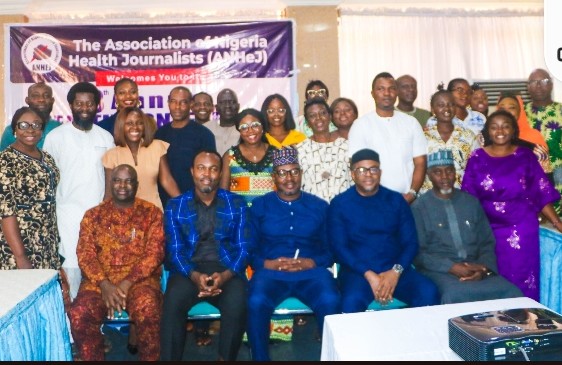
The Special Adviser to President Tinubu on health, Dr. Salma Anas Kolo, stated this on the final day of the 8th annual Conference of Association of Nigeria Health Journalists (ANHeJ).
According to the presidential aide, the federal government has made pogress in strengthening health sector.
“We are on track to achieve universal health coverage, and we have made significant progress in strengthening our primary healthcare systems, tackling neglected tropical diseases, and improving maternal and child health outcomes.”
However, Dr. Kolo noted that there are still significant gaps in the healthcare system, particularly at the sub-national level, and called for greater efforts to address the challenges.
“We need to double our efforts, not only at the national level but also at the sub-national level, to ensure that quality healthcare services are delivered to all Nigerians,” she said.
Dr. Kolo emphasized the importance of the media in promoting health awareness and accountability.
“The media plays a very critical role in all that we are saying in terms of generating accurate information, correct information, and sharing the information in a very culture-sensitive manner.”
Also speaking with journalist in an interview, the Director of the National Institute for Cancer Research and Treatment, Prof Musa Ali Gombe appealed for increased funding for the National Cancer Health Fund.
According to him, the National Cancer Health Fund has disbursed close to N2 billion to indigent cancer patients in Nigeria over the past three years.
However, Prof. Gombe noted that not all applicants have been successful in accessing the fund, citing various reasons such as incomplete profiles, abandonment of applications, and failure to meet the eligibility criteria.
“Some patients apply to areas that are not for breast, cervix, and prostate, which are the focus area of the pilot program. They were also not approved,” he explained.
Prof. Gombe emphasized that the fund is specifically designed for indigent cancer patients, and that a rigorous assessment process is in place to ensure that only eligible patients receive support.
“We have confirmed that some of the applicants are dead already, so there is no need to approve the funds. That is why there is a gap between the applicant numbers and the numbers that we see,” he said.
Despite the challenges, Prof. Gombe expressed optimism about the impact of the fund, stating that “15% of the patients were done within this period, based on the efficiency that has been improved on the portal.”
The African Health Budget Network (AHBN) also commended the Association of Nigeria Health Journalists (ANHeJ) for its vital role in promoting health awareness, holding policymakers accountable, and ensuring that health issues remain on the national agenda.
Speaking on behalf of AHBN’s coordinator, Dr. Aminu Magashi, a representative of the organisation praised ANHeJ’s efforts in driving meaningful dialogue around health financing, health equity, and universal health coverage.
“You are in many ways the bridge between complex health policies and the communities who need to understand and benefit from them.
AHBN also acknowledged ANHeJ’s strides in strengthening the capacity of journalists to report on health budget and policies with depth, accuracy, and a focus on transparency.


