Victoria Mgbanwa
As part of measures to curb flooding across the country, Mustapha Habib Ahmed, The Director-General of the National Emergency Management Agency (NEMA), has admonished the state governments to stop allocating land and granting building permits along waterways.
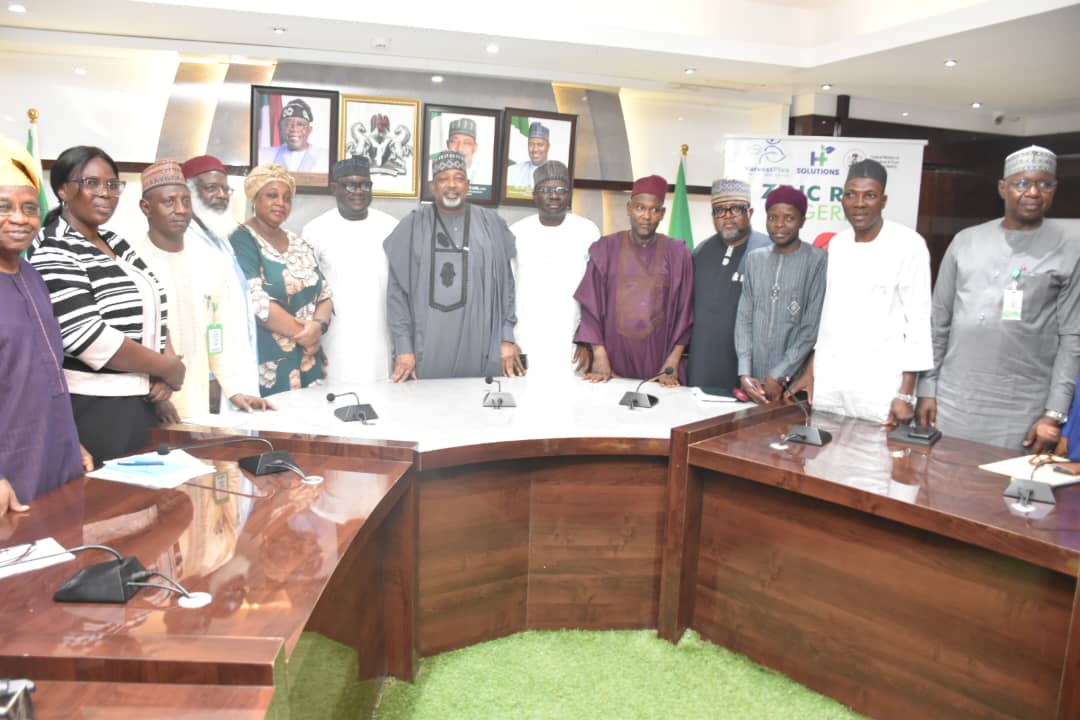
The D.G stated this in Abuja during his address to the state Governor Charles Soludo of Anambra State, who commended President Bola Ahmed Tinubu’s intervention in mitigating the impacts of flooding on affected Anambra indigenes.
Ahmed, explained the need to intensify efforts to prevent emergencies.
He stated: “It is on record that in 2018, following the devastating flood disaster that wreaked havoc in Anambra State, NEMA activated and set up an Emergency Coordination Centre (EOC) in Awka, Anambra State, to coordinate disaster response in Anambra and Delta States.
NEMA facilitated the deployment of experts from the United Nations Disaster Assessment and Coordination (UNDAC) in Geneva to support Anambra State with coordinated disaster response.
“During that period, several communities were completely inundated by floodwaters, leading to the loss of lives and the destruction of livelihoods. Some of the worst-hit locations include communities in Ogbaru and Onitsha South Local Government Areas along the river Niger. NEMA deployed assorted relief materials for direct distribution to support persons in need in the entire state.
“Your Excellency, I am proud to say that at the end of the operation, the Anambra State Government sent a commendation letter to the NEMA team deployed to the state for executing an excellent intervention during the 2018 flood season.
“In the same vein, in 2022, during the flood season, NEMA had to activate its partners in the Disaster Response Units (DRUs) of the military to support Search and Rescue Operations as the situation escalated in Anambra State and led to a boat mishap that resulted in the loss of lives on the River Niger.
“Just in the past couple of days, NEMA distributed relief items comprising food and non-food items, building materials, and livelihood option tools in Anambra State under the Special National Economic Livelihood Emergency Intervention (SNELEI). This intervention targeted persons affected by the 2022 flood disaster and those identified as the most vulnerable groups of persons under the multi-dimensional poverty indicators of the National Bureau of Statistics (NBS).
“Your Excellency, we don’t pray for disasters to happen, yet disasters, crises, and emergency situations are part and parcel of societal evolution throughout the history of humankind. Most disasters can be averted or mitigated with simple, deliberate actions. Avoiding the dumping of refuse in waterways and drainages in our cities can reduce urban flooding drastically.
“We must rethink our environmental and ecological civilization to avoid potential disasters. Urban and regional planning authorities must avoid allocating land and granting building permits along waterways. Functional local emergency management committees (LEMCs) and community volunteers must be set up in every local government area with adequate funding and trained manpower.
“We must take disaster risk management to the grassroots. People in local communities are the vital first responders who save lives before support arrives from state capitals or Abuja.Disasters are local; the first responders must be at the local level,” he added.
The D.G also made an assurance that relevant relief items would be delivered to the States within record time. While reiterating the agency’s resolve to sustain the existing collaboration with the Anambra State Government.
The deputy governor, Dr Gilbert Ibezim, who represented Governor Soludo, explained that 10 out of the 21 local government areas of the state are currently facing various emergencies ranging from flooding to erosion.