Bukola Afeni
Experts in Civil Societies Organizations, government, defence and security sector, has called for judicial intervention to ensure transparency in military budgeting.
The group also urge CSOs such as Socio-Economic Rights and Accountability Project (SERAP), and other notable bodies to ensure that there is transparency and accountability in the defence and security sector.
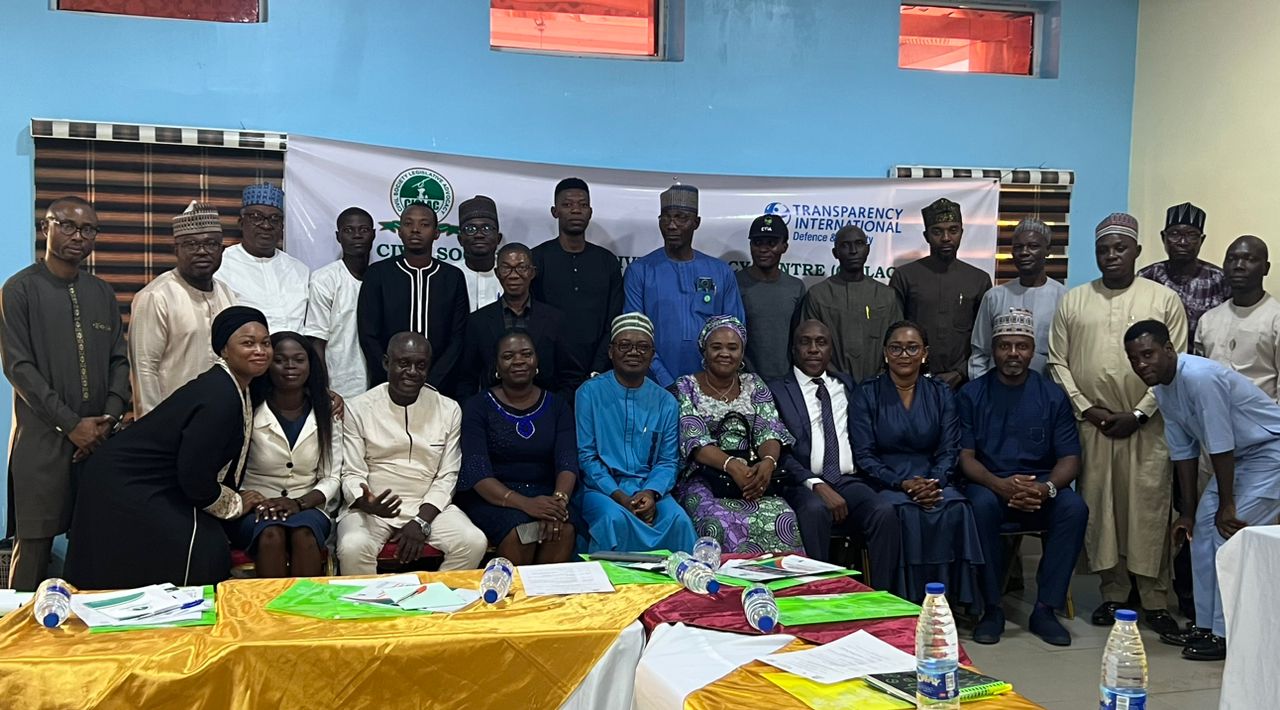
They made the resolution in a communique issued at the conclusion of a one day capacity building session for relevant oversight agencies on anti corruption reforms in Nigeria’s defence and security sector.
The program was organized by Civil Society Legislative Advocacy Centre (CISLAC)/Transparency International in Nigeria(TI-Nigeria) in partnership with Transparency International- Defence and Security Project(TI-DSP), and with Technical support from the Institute for Peace and Conflict Resolution(IPCR) in Nasarawa State.
The participants urged the National Assembly to develop specific security reforms aimed at systematically curbing the root causes of corruption within the defence and security institutions in Nigeria.
” There is a need to adopt an adequate checks-and-balances approach to oversee the activities of the MDAs (Ministries, Departments, and Agencies).
Involvement of civil society organizations (CSOs) in the budgeting and monitoring processes to hold the MDAs accountable for the non-execution of approved projects is critical”.
The group emphasised advocacy for the amendment of the Freedom of Information (FOI) Act to eliminate grey areas.
“We need to continuously raise awareness through the use of digital tools, and also
engage in targeted advocacy efforts aimed at the military. We also seek for the mainstreaming of anti corruption into security sector reforms”.
The participants observed that corruption is the primary enabler of insecurity in Nigeria and across Africa, affecting all levels of society.
“To achieve peace, corruption must be addressed. Indexes show a direct correlation between a country’s ranking on the corruption perception index, its Human Development Index (HDI), and its vulnerability to conflict and insecurity.
“The prevalence of corruption in developing countries, including Nigeria, has become deeply ingrained in the culture, often overshadowing the original human culture.
” External factors contribute to the perpetuation of corruption in Africa.
Relying on corruption to stabilize a fragile society like Nigeria is unsustainable and fails to meet the basic needs of the people, ultimately empowering non-state actors who exploit public dissatisfaction.”