Esther Salifu
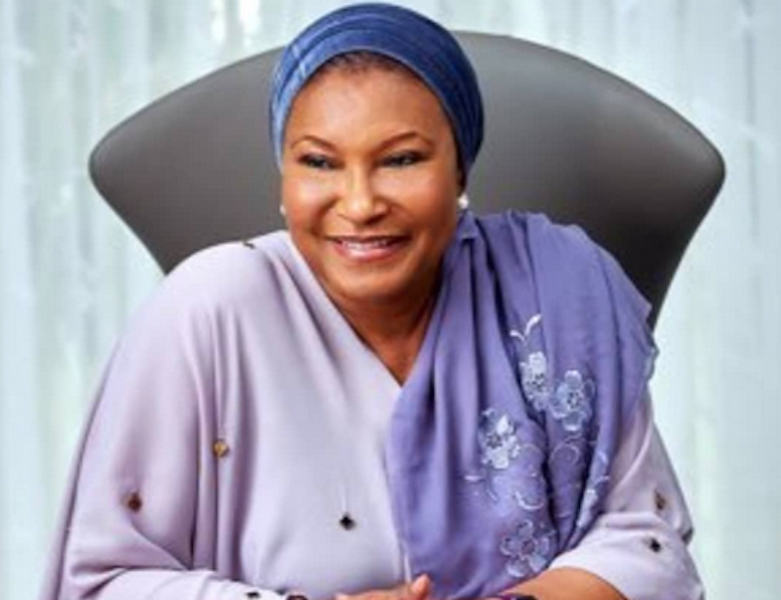
Kaduna State’s school feeding programme has continued to attract international acclaim as a model for social inclusion and grassroots economic empowerment, following recognition of its coordinator, Dr. Fauziya Buhari-Ado, with the 2025 Humanitarian Bootcamp Award in Nairobi, Kenya.
Dr. Buhari-Ado, who serves as the Special Assistant to the Kaduna State Governor on School Feeding, received the honour for her contributions to advancing food security, women’s empowerment, and child nutrition across the state.
In a statement issued on Friday, Dr. Buhari-Ado said the initiative funded annually with over ₦4 billion has not only kept thousands of children in school but also transformed the livelihoods of over 7,000 women employed as cooks and supported local farmers supplying produce to over 3,400 schools across the state.
Speaking while receiving the award, themed “Feeding the Future: Leveraging Humanitarian Leadership to Achieve Food Security and Economic Transformation in Africa,” Buhari-Ado described Kaduna’s school feeding scheme as “a holistic approach that strengthens multiple sectors of the economy.”
“Every meal served goes beyond nourishment it represents hope, care, and opportunity for the next generation,” she said. “Feeding our children is not charity; it is nation-building.”
She credited Governor Uba Sani for his leadership and commitment to sustaining the programme, noting that his confidence in her capacity to serve has enabled the team to “impact the lives of children across Kaduna State.”
Under Governor Sani, she said, the scheme has evolved into “a model of inclusive development improving nutrition, boosting school attendance, empowering women, and supporting local agriculture.”
Dr. Buhari-Ado used the platform to call for stronger humanitarian leadership and strategic partnerships among African governments, development agencies, and private actors to tackle hunger and foster sustainable transformation across the continent.
“Food security must be seen as a strategic pillar of Africa’s development,” she stressed. “When the day comes that no African child goes to bed hungry, we will know that we have truly fed the future not through power, but through humanity and compassion.”
She also lauded women leaders who continue to drive humanitarian action in Africa, paying tribute to Dr. Martina Nentawe Yilwatda, Patron of the Women’s Leadership Network, and Mrs. Deborah Hornecker, the Network’s founder, for their mentorship and commitment to women’s empowerment.
The Kaduna model aligns closely with President Bola Ahmed Tinubu’s renewed efforts to tackle hunger and child malnutrition through the Renewed Hope Mo’Feed Project, launched earlier this month in Lagos.
According to the Senior Special Assistant to the President on School Feeding, Dr. Yetunde Adeniji, the federal initiative seeks to reach over 600,000 vulnerable Nigerians across the six geopolitical zones, combining nutrition support with women’s economic empowerment.
Analysts say Kaduna’s success story offers a blueprint for other states aiming to bridge the gap between humanitarian action and sustainable local development.
With over 730,000 pupils fed daily, Kaduna’s school feeding programme continues to play a dual role keeping children in school while stimulating local agricultural value chains.
For Dr. Buhari-Ado, the recognition in Nairobi is less a personal achievement and more a validation of collective effort. “The cooks, the farmers, the teachers, and the government each plate of food served is their victory,” she said.