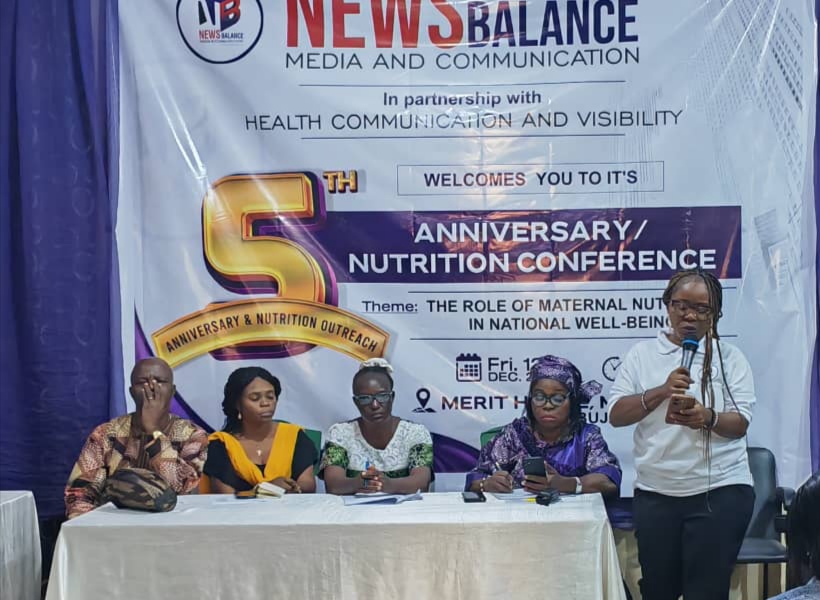
News Balance Media and Communication has called on government and key stakeholders in the health sector to prioritize maternal nutrition, stressing that poor nutrition remains a major public health challenge in Nigeria and globally.
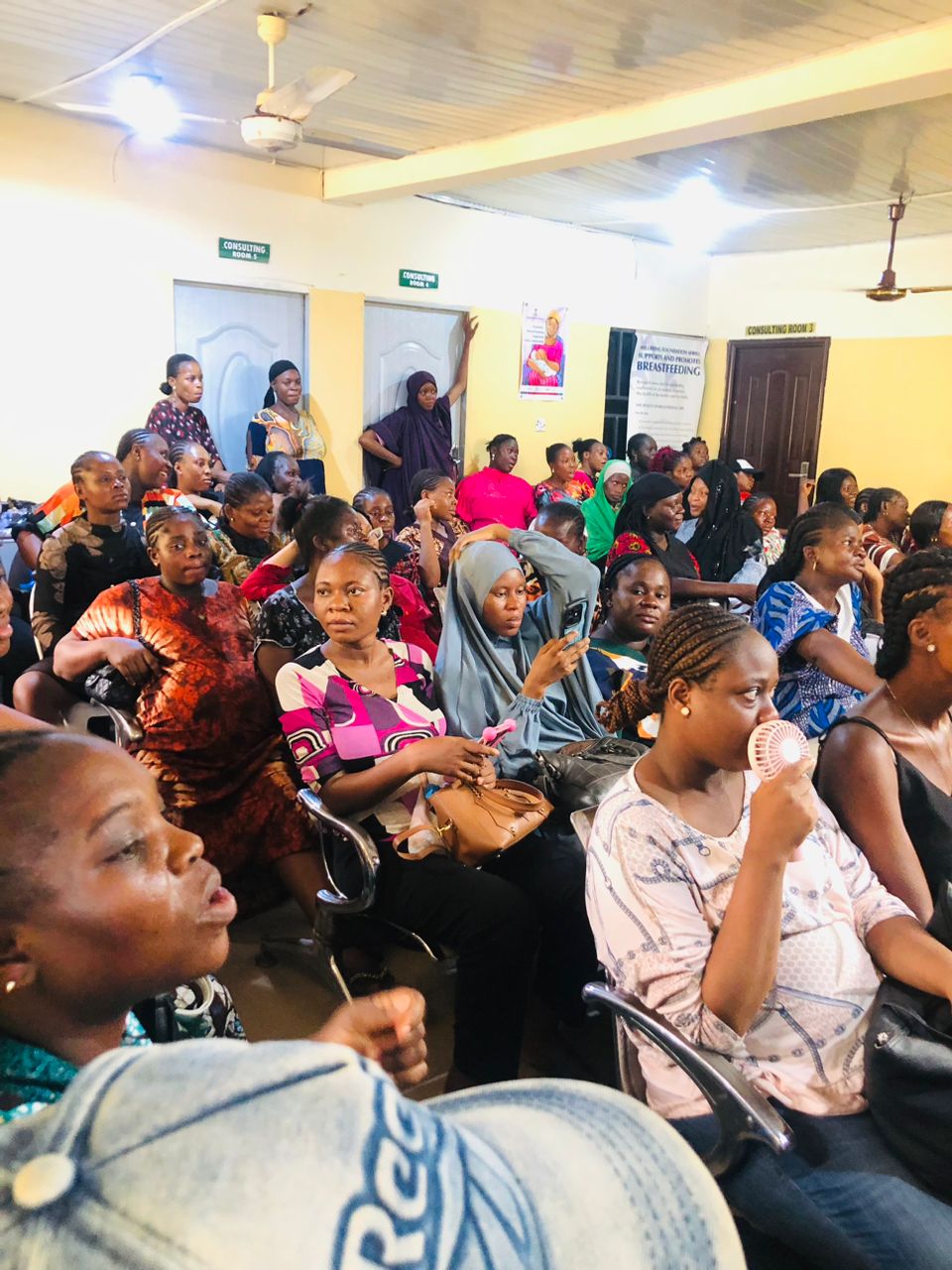
The call was made by the Team Lead, Bukola Afeni, during the 5th Anniversary of News Balance Media and Communication, held in Abuja. The event brought together stakeholders who deliberated on the challenges of malnutrition in Nigeria and explored sustainable pathways forward.
Afeni explained that the nutrition conference focused on evidence-based approaches to improving maternal nutrition, strengthening multi-sector partnerships, scaling nutrition interventions in humanitarian settings, and advancing advocacy and policy recommendations to ensure nutrition is prioritized in national health planning.
According to her, Nigeria faces an alarming burden of undernutrition among women.
“The statistics are stark. An estimated 7.3 million adolescent girls and women of reproductive age in Nigeria are undernourished, increasing health risks for mothers and their newborns,” Afeni said.
She noted that Nigeria’s maternal mortality rate remains one of the highest globally, with 1,047 deaths per 100,000 live births, adding that micronutrient deficiencies significantly contribute to the burden.
“Poor maternal nutrition is associated with low birth weight, preterm births, and an increased risk of childhood undernutrition. These conditions can limit a child’s growth, cognitive development, and future productivity,” she added.
As part of efforts to address these challenges, Afeni said the organization, in partnership with Health Communication and Visibility, has visited two Internally Displaced Persons (IDP) camps in Abuja, where direct maternal and child nutrition support was delivered.
“We believe that no woman or child should be left behind when it comes to health, nutrition, and dignity. This conviction drives our commitment to advancing equitable access to essential nutrition services,” she said.
She emphasized that maternal nutrition is foundational for healthy pregnancies and thriving children.
Speaking on the role of culture in malnutrition, Judith Ugbodu, Program Manager at NOIPolls, said harmful cultural beliefs continue to influence what women eat or do during pregnancy, thereby contributing to malnutrition.
She stressed the power of storytelling in changing perceptions.
“If stories are told in an engaging way, they make a real difference. Sometimes I watch the news and only hear statistics, and it sounds like blah, blah, blah. But when I see a woman like myself and hear her story about nutrition and how she improved her situation, it becomes meaningful and helps me make informed decisions,” Ugbodu said.
According to her, change begins at the individual level, but the approach to communication determines whether change is sustained.
“When you go into a community, you must first understand how to reach that community effectively. Every community has people they trust. If you want your message to be accepted, engage those trusted leaders market heads, traditional rulers, or community influencers,” she explained.
She highlighted the critical role of the media in working closely with community leaders to ensure nutrition messages are credible and accepted at the grassroots.
Ugbodu also emphasized the importance of early education, noting that young people are constantly exposed to junk food advertising without adequate nutrition guidance.
“Nutrition education is very essential. If the right information is shared through relatable stories, trusted voices, and consistent education, people are more likely to understand, believe, and act,” she said.
Also speaking at the event, the Executive Director of Steady Hope Support Initiative, Professor Odigie
Okpataku-Ehiz, stressed that nutrition education must be customized to local realities, explaining that many children grow up without understanding that food is meant to nourish the body, not just satisfy hunger.
“When we fail to emphasize, even in our school curriculum, that food is for health and not just to fill the belly, we create a dysfunctional understanding of nutrition,” she said.
She stressed the need to reach children early with clear and practical nutrition education, noting that early understanding shapes lifelong healthy choices.
She warned that nutrition campaigns that fail to engage key community actors risk being ineffective.
“Stakeholder management is very key. If you do not carry along good drivers in the community, your advocacy will, at best, be selfish,” she said.
She also expressed concern over food advertising, which she said relies heavily on emotional and subliminal messaging rather than nutritional value, adding that many adults lack basic knowledge of micro- and macronutrients.
Highlighting Nigeria’s largely carbohydrate-heavy diet, she stressed the need for advocacy strategies that align with local dietary practices.
“Our advocacy must be customized to the needs of local people. When messages are disconnected from their realities, they cannot benefit from what you are trying to achieve,” she said.
Professor Okpataku-Ehiz further noted that many women are unaware of the link between micronutrient deficiencies and pregnancy-related complications, stressing that empowering women with knowledge encourages ownership and better health outcomes.
“It is not just about saying ‘you need to.’ It is about helping them understand the value, the consequences of not acting, and the benefits of good nutrition,” she explained.
She added that nutrition advocacy cannot be separated from family life, noting that shared family time plays a crucial role in shaping healthy eating habits.