Esther Salifu
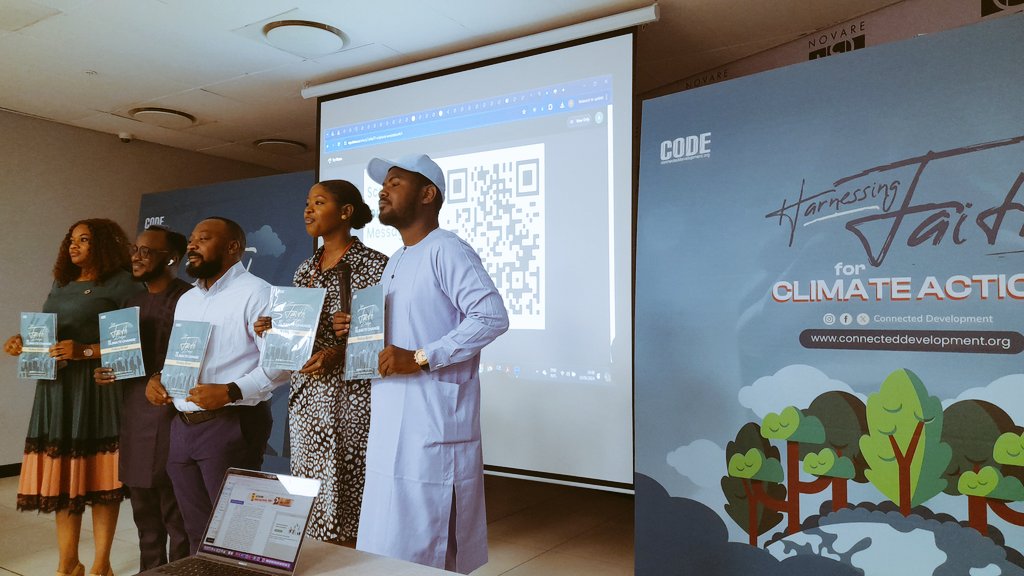
In a significant move toward inclusive climate governance, UN Women Nigeria, in partnership with the National Council on Climate ChangeNigeria Unveils Gender Integration Toolkit to Advance Climate Action (NCCC), has officially launched the Gender Integration Toolkit and Strategy for Nigeria’s Nationally Determined Contributions (NDCs).
The newly unveiled toolkit is designed to mainstream gender considerations across climate planning, financing, implementation, and monitoring at all levels of governance.
It offers practical guidance to ensure that climate policies, projects, and investments are not only effective but also gender-responsive.
Speaking at the launch, the Director-General of the National council of climate change Bar. Mrs. Tenioye Majekodunmi, emphasized the urgent need to embed gender in climate action.
“Gender equality is not just a social imperative it is a climate imperative,
“When women have equal access to resources, farm yields rise, household resilience improves, and communities become more sustainable.” She declared
The launch aligns with Nigeria’s ongoing efforts to implement NDC 3.0, guided by the Climate Change Act of 2021 and the Long-Term Low Emission Development Strategy (LT-LEDS).
According to Majekodunmi, the toolkit supports these frameworks by institutionalizing gender-responsive approaches across priority sectors such as energy, agriculture, transport, industry, and waste management.
“We are building an institutional architecture that integrates gender considerations across all sectors.
“The NDC Gender Integration Toolkit we launched today is a cornerstone of that effort.”she noted .
Developed by UN Women Nigeria, the toolkit equips national, state, and local institutions with tools to identify gender gaps, apply gender-sensitive approaches to project design, and monitor progress using Monitoring, Reporting and Evaluation (MRE) mechanisms and sex-disaggregated indicators.
“If you’re not tracking, you’re just wasting time,”
“That’s what I love the most about this toolkit the ability to track these results and make adjustments based on evidence.”Majekodunmi said.
She stressed that gender equality must move from being an afterthought to becoming a standard for performance across government processes.
“No policy, no investment, and no decision on climate change should be made without considering its gender implications.
“This is about institutionalising gender-responsive budgeting and ensuring that women are part of the decision-making process from the local to the national level.”
The Director-General also commended the collaborative development of the toolkit, acknowledging the contributions of UN Women Nigeria Country Office, the Federal Ministry of Agriculture and Food Security, the Federal Ministry of Environment, and the Federal Ministry of Women Affairs.
Majekodunmi urged all stakeholders to adopt the toolkit as a living framework, capable of adapting over time to drive real, measurable change.
“Let us use this toolkit not as an end in itself, but as a living guide, a framework for shared accountability, a catalyst for innovation, and a bridge between national ambition and local impact.”
“When gender equality drives climate action, sustainability flows naturally.”
Also speaking at the event, UN Women Country Representative to ECOWAS, Beatrice Eyong, emphasized the critical need to place gender at the center of climate policy.
She highlighted the disproportionate impact of climate change on women, their integral role in climate-sensitive sectors, and the importance of transforming policy tools into tangible action.
“According to the UN, 80% of people displaced by climate change are women and children.
“Climate-related disruptions directly undermine food security, household incomes, and national economies. Nigeria is no exception.” She said.
She also underlined the often-overlooked contributions of women to local climate adaptation strategies.
“Women have a unique knowledge of the environment about medicinal plants, animals, and sustainable practices.
“They have something to bring to the table to make sure that whatever we are doing is inclusive, rich, and equitable.” Eyong explained.
Finally, she called on ministries, departments, and agencies to take ownership of the toolkit and translate it into real-world results.
“Tools alone are not enough. They depend on strong ownership and active application,”
“Mainstreaming gender in the energy sector, for example, is not only about including women in renewable projects, but ensuring equitable access to training, finance, and technology.” Eyong urged .