Esther Salifu
The National Council on Climate Change (NCCC) has called for increased domestic and international financing, alongside greater investment in human capital, institutional capacity, and climate technologies, to ensure Nigeria’s NDC 3.0 delivers on its climate commitments.
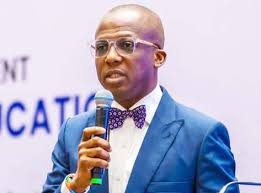
Speaking at the Validation Workshop of the NDC 3.0 on Wednesday in Abuja, The Director-General of the National Council on Climate Change (NCCC), Barr. Teni Majekodunmi, highlighted the country’s significant financing gap, stressing that adequate funding is critical to implementing both mitigation and adaptation measures.
Nationally Determined Contribution (NDC) 3.0 is a comprehensive plan aims to reduce greenhouse gas emissions by 20% unconditionally and up to 47% with international support by 2030, building upon lessons from previous initiatives and setting clear pathways for enhanced mitigation and adaptation strategies across various sectors of the economy.
Majekodunmi disclosed that Nigeria’s updated climate action plan, the Nationally Determined Contribution (NDC) 3.0, will require tens of billions of dollars over the next decade to meet emission reduction targets and adapt to climate impacts.
She emphasized that successful implementation also depends on sustained investment in human capital and institutional capacity. “Capacity building is not a one-off exercise; it must be systemic, continuous, and context-driven, supported by South-South cooperation and partnerships with global institutions and academia,” she said.
The NCCC boss further underscored the importance of technology access in advancing Nigeria’s climate goals. She noted that Nigeria must be supported to acquire and deploy clean energy technologies such as solar, wind, hydro, and hydrogen, as well as scale up energy efficiency, modernize agriculture and irrigation systems, and strengthen other climate-resilient sectors.
She called on developed countries to fulfil their obligations under the UNFCCC and Paris Agreement, particularly in providing technology transfer and support for innovation in developing nations.
“We call on our global partners, particularly the developed countries, to fulfil their commitments under the UNFCCC and Paris Agreement, particularly in relation to technology transfer and support for innovation in developing countries.”
The Special Adviser to the President on Climate Finance and Stakeholder Engagement, Shelleng Ibrahim, also stressed the need for Nigeria to demonstrate readiness in managing climate finance through stronger governance and alignment with climate targets.
Ibrahim said the country must proactively position itself to access global climate finance or risk being left behind.
“Nigeria must act like a country ready to manage climate finance by building trust, improving governance, and aligning its budget frameworks with climate targets. The clock is ticking and the competition for climate finance is fierce. Nigeria must lead or be left behind,” he warned.
Ibrahim further emphasized that the NDC 3.0 goes beyond being a climate commitment, describing it as a comprehensive development strategy. According to him, the document reflects Nigeria’s national priorities in energy transition, agriculture, waste management, and resilient infrastructure key pillars of the Tinubu administration’s policy direction.
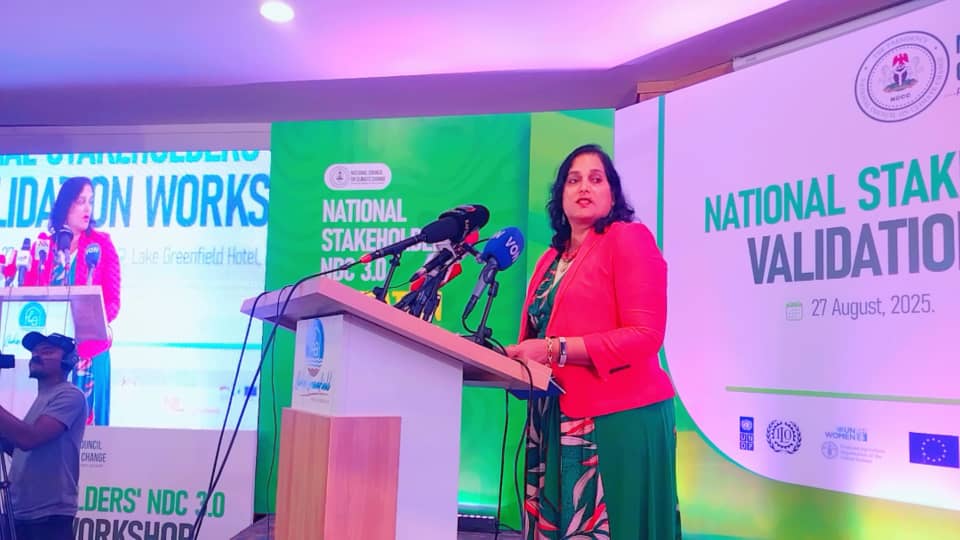
Also speaking, the Resident Representative, United Nations Development Programme (UNDP), Varsha Redkar-Palepu, commended Nigeria’s bold step in updating its Nationally Determined Contribution (NDC 3.0), describing it as a landmark commitment to climate action and sustainable development.
Varsha said Nigeria, as Africa’s largest economy and most populous nation, carries a unique responsibility to lead by example.
She described the NDC 3.0 as a blueprint for inclusive, resilient, and low-carbon development that prioritizes renewable energy, agriculture, forestry, and water, while promoting climate-smart solutions.
“NDC 3.0 is not just a document, it is a roadmap for green growth, climate justice, and sustainable development. It creates jobs, protects vulnerable communities, and positions Nigeria as a leader in shaping Africa’s sustainable future,” she said.
Varsha further stressed that the Paris Agreement and the NDC framework remain the best hope for coordinated global climate action, noting that Nigeria’s leadership sends a powerful signal that the Global South is not waiting but taking charge.