Bukola Afeni
Stakeholders from the academia, CSOs and government parastatal has called for the implementation of the United Nations Security Council Resolution 1325 to adequately integrate women’s participation and representation at all levels of decision making in the Defence and Security sector.
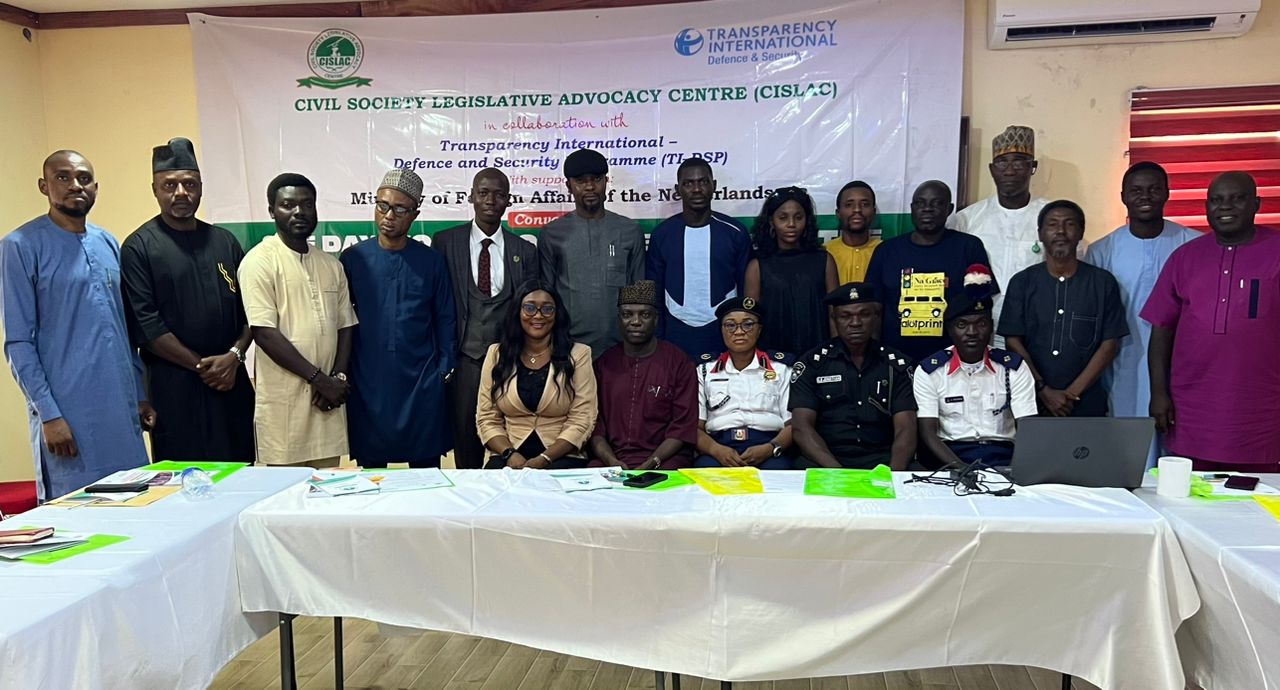
The Stakeholders made the disclosure at a program organised by CISLAC)/TI-Nigeria in collaboration with Transparency International – Defence and Security Program with support from Ministry of Foreign Affairs of the Netherlands at a One-day Workshop on Reforms focusing on financial management, gender and operational disparities in the Nigerian Defence and Security sector.
The Workshop is aimed at revisiting reform efforts in the Defence and Security sector, while proffering holistic recommendations to various challenges hampering reform process.
The group added that integrating a gender component in Defence and Security budget led relevant Ministries will ensure adequate financial planning for inclusive operation with adequate monitory mechanism for gender-related compliance.
“Adequate respect for human rights of the citizens, while upholding the sanity and sanctity of the rules of law as laid down in Constitution of the Federal Republic of Nigeria and international human rights convention, is important to improving the defence and security sector”.
There was opening remark from the Executive Director of CISLAC/TI-Nigeria, Auwal Ibrahim Musa (Rafsanjani). The Workshop also had as technical sessions papers titled Reforming the Nigerian Defence and Security Sector and the Imperative of Efficient Financial Management, presented by Prof. Chris Kwaja; and Gender and Operational in Nigeria’s Defence and Security Sector: Issues, Challenges and Prospects by D. Sunday Adehjo. The Dialogue was attended by Security Agencies, Civil Society and the academia.
The stake holders noted that effective oversight mechanism and structure of the Defence and Security sector must take into cognizance proactive functionality and operational independence of the legislature, executive, judiciary and non-state actors.


