Victoria Mgbanwa
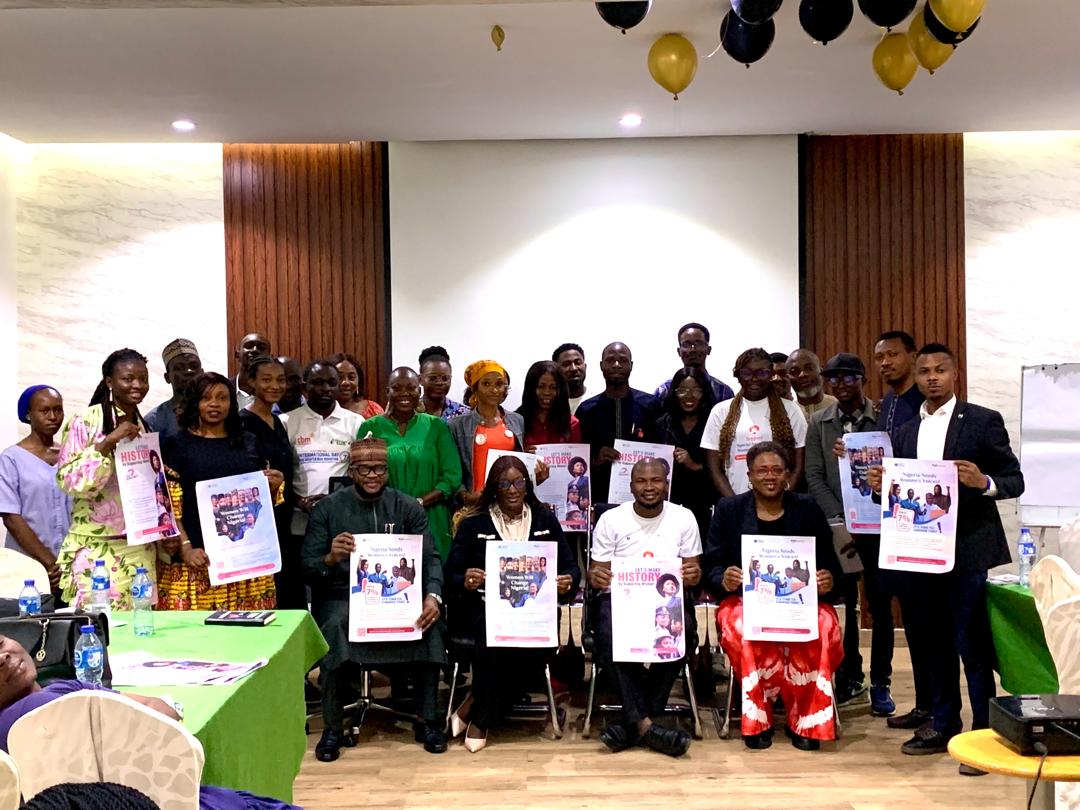
In a bid to address the persistent under representation of women in Nigerian politics, Stand to End Rape Initiative (STER), in collaboration with the German Embassy, has launched a groundbreaking project titled “Amplifying Women’s Political Participation in Nigeria for the 2027 Elections.”
The initiative seeks to secure the adoption of a legislative quota through the passage of the Special Seats Bill, guaranteeing a minimum representation of women in the National Assembly by 2027.
This move comes at a critical juncture as Nigeria faces mounting calls for gender-inclusive governance to foster balanced decision-making and national development.
Currently, women hold only 4 out of 109 Senate seats and 16 out of 360 House of Representatives seats.
The figure is widely regarded as inadequate to address women’s unique challenges in policy formulation and governance.
Speaking at the event on Tuesday Rinmincit Temlong-Aboki, A gender and development advocate hailed the initiative as “timely” and crucial for advancing gender equality.
She emphasized that increasing the number of women in decision-making roles would lead to more inclusive policies and positively impact Nigeria’s development trajectory, including its GDP.
“I feel that it is a very good event, and I’m so happy. And it’s very timely, because right now we are having talk around the special legislative seat bill for women, and it has passed second reading. So this is very timely that they are having conversation around women in politics, the pathway for women in politics.
“So I feel that this is, like I said, it’s timely, and it’s at a point of galvanizing support for women in politics, but not just with only women, but different stakeholders.
“The first thing that I would say is an increased number of women in the Senate and in the house of representation. And again, with that, we’re actually going to see that would have women in decision making.
“We will see policies that are more inclusive. We will see a whole change in the developmental experience of Nigeria, and we will actually see that it would translate the economy and the GDP at large.
She also called for grassroot advocacy campaign particularly via radio, to inform and mobilize rural women who play significant roles in Nigeria’s political processes.
“We need to let them know about the bill on radio, and also advocacy visit campaign right to the grassroot, for them to know that this is happening, and because grassroots women are really engaged in politics. They are involved in the political process right to the voting, they are all included.
Hansatu Adengbite, a gender advocate and women’s economic empowerment specialist, highlighted the need for balanced leadership in Nigeria, urging that women should support each other, collaborate with male allies, and make impactful contributions when given leadership opportunities.
“I want women to believe in themselves and have a voice, irrespective of their background. I want to encourage women to find ways of supporting other women to rise to the top. You see, this life is not just about you being at the top, but the more leaders you build, the more you have a legacy. We need to support ourselves”.
“Women must have male allies that are supportive.We are not in competition or war with men. No, we are only saying that in order for us to move forward in a more accelerated and better way, let us have things from different perspectives.
“We are admonishing our women that whenever they are at the helm of leadership they should not misuse it.
“Am encouraging women in all communities to focus on ways to educate themselves and build their economic power, and be very careful about the kind of partnership and collaboration they partake in at every point in time”.
The Program Officer STER, Hussein Mohammed also underscored the importance of the Special Seat Bill in addressing both gender inequality and violence against women in politics.
He explained that Research conducted by STER across 18 states revealed high level of violence faced by women during political participation, explaining that the bill would reduce violence by reserving specific seats for women, thereby decreasing competition with male counterparts.
“In 2021 we had carried out a research around violence that women face during political participation, and we discovered that, because we carried out this research within 18 states, we discovered that there’s a high rate of violence against women.
“ We have been advocating for the special seat bill. One of the reason why the special seat bill is being put in on the table is not just because we want to increase the participation of women in politics, but also to reduce the level of violence.”
He cited the current lack of representation as a barrier to progress and called for a shift in societal narratives.
“Women have taken position, changed narrative, have helped in situation around national development then. So let’s start changing the narrative.
“I would encourage us that we should be patriotic and uphold the Nigerian brand and make sure that we paint Nigeria in a better phase.”