Victoria Mgbanwa
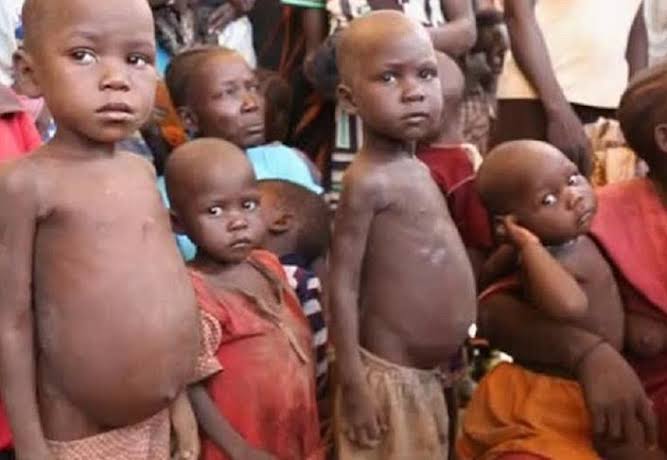
The United Nations Children’s Fund, UNICEF, has revealed that up to 50%, which is 11 million Nigerian Children suffer from Severe child food poverty which leads to a life-threatening form of Malnutrition.
The organization disclosed this in a new report released on Friday, where it analysis the causes of dietary deprivation among the world’s youngest and most vulnerable, children under five years of age, in nearly 100 countries, and across income groups.
The report reads, “Around 11 million children, or one in every three children under five years of age, in Nigeria are experiencing severe child food poverty, making them up to 50 per cent more likely to experience wasting, a life-threatening form of malnutrition, a new UNICEF report reveals today.
“Globally, four out of five children experiencing child food poverty are fed only breastmilk/milk and/or a starchy staple, such as rice, maize, or wheat. Less than 10 per cent of these children are fed fruits and vegetables. And even fewer, less than 5 per cent, are fed nutrient-dense foods such as eggs, fish, poultry, or meat.
“For the first time, the Child Food Poverty: Nutrition Deprivation in Early Childhood report analyses the impacts and causes of dietary deprivation among the world’s youngest and most vulnerable, i.e. children under five years of age, in nearly 100 countries, and across income groups.
“Globally, 181 million children under the age of five who consume, at most, two of eight defined food groups are considered in severe child food poverty and unable to sustain optimal growth and development in early childhood and beyond. Nigeria ranks among the 20 countries that account for almost two-thirds (65 per cent) of the 181 million children living in severe child food poverty.”
UNICEF also called on governments of Nigeria, development and humanitarian organizations, donors, civil society and the food and beverage industry to by all means end food child poverty
“Transform food systems so that nutritious, diverse and healthy foods are the most accessible, affordable and desirable option for caregivers to feed young children.
“Leverage health systems to deliver essential nutrition services to prevent and treat malnutrition in early childhood, including support for community health and nutrition workers to counsel parents and families on child feeding and care practices.
“Activate social protection systems to address income poverty through social transfers (cash, food and vouchers), in ways that are responsive to the food and nutrition needs of vulnerable children and their families.” The statement added.