Esther Salifu
The Minister of State For Environment, Dr. Iziaq Adekunle Salako has emphasised the need to take decisive action to mitigate climate change and build a resilient, sustainable future for generations to come.
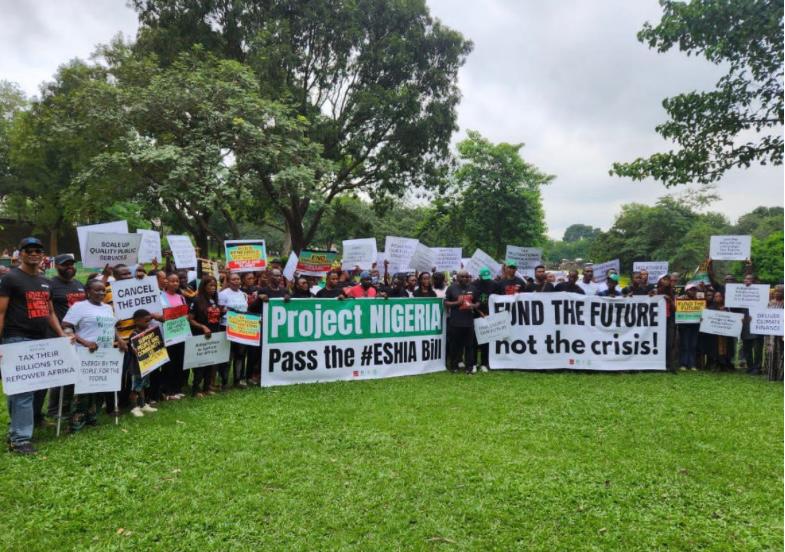
Salako made the disclosure at a roundtable talk on climate budgeting and green accountability held in ABUJA.
He said the gathering of the stakeholder underscores the importance of collaborative efforts of , government, NGOs, CSOs , industry leaders , organized private sector and average Nigerians in a collective effort to safeguard the environment.
According to the Minister, Climate change is one of the most significant challenges which impacts are felt globally, transcending borders and affecting every aspect of our lives.
“From rising sea levels and extreme weather events to biodiversity loss and food security threats, the consequences are profound and far-reaching”, he said.
Salako underscores the role of climate budgeting, he said: “Climate budgeting is a fundamental tool in our endeavour to combat climate change. By integrating climate considerations into our national budgeting processes, we ensure that our financial resources are allocated in a manner that supports sustainable development and climate resilience.
“Through green accountability, systematic ways can be created to give the citizen and civil society a voice that places them at the heart of climate funding such that they influence disbursement, implement and monitor solutions and hold leaders accountable”.
He further revealed that the federal government, through the Ministry of Environment, has initiated several key programmes in addressing climate change.
“We have instituted the Green Bond Program, through which Nigeria has pioneered the issuance of sovereign green bond in Africa to finance projects that reduce greenhouse gas emissions and promote sustainable development. So far Nigeria has issued 2 sovereign green bonds, raising a total sum of N25.69 billion to finance 39 projects cutting across afforestation, renewable energy, transportation, agriculture and water resources”, he added.
Salako said the NDCs recommended the following in achieving climate goals: integrating climate action into national and sub-national development plans and budgets, establishing robust monitoring, reporting, and verification (MRV) systems to track progress on climate actions, mobilizing both domestic and international financial resources to support climate initiatives, continuous training and development programs to enhance technical and managerial capabilities for effective climate governance, and engaging stakeholders, including the private sector, civil society, and local communities, in the design and implementation of climate actions to ensure inclusive and effective climate policies”.
He further said: Under President Bola Ahmed Tinubu, climate action is receiving more attention including better funding when compared to previous governments. The introduction of a special presidential initiative for climate mitigation and adaptation, the Presidential Committee on Climate Action and Green Economy Solutions, the Nigeria Green Industrial Zone Program and similar initiatives have the potentials to deepen green budgeting in our appropriation processes.
However the Minister said “There is still a substantial gap between available resources and the required investments for effective climate action. According to the AFDB, the total climate financing gab in Nigeria is 20.5 USD per annum required for investment in renewable energy, smart agriculture, sustainable transport, water and waste management systems. The total volume of our 2024 green bond representsts only about 0.2% of the 2024 national budget depicting a low penetration of green in our budget.”
According to Salako, leveraging the power of science and technology to develop effective climate solutions, supporting research and development in clean technologies, and promoting the adoption of sustainable practices across alll sectors will enhance innovative financing.