Every day, hospitals around the world depend on the availability of blood to determine whether a mother survives childbirth, a child recovers from severe anaemia, or an accident victim lives. This life-saving intervention begins with a simple act: blood donation.
As we commemorate World Blood Donor Day 2026 under the theme, “One Drop of Humanity. Give Blood. Save Lives.”, we are reminded that blood donation is far more than a medical procedure. It is a powerful expression of humanity, solidarity, and compassion.
In Nigeria, the need for safe blood is a significant public health concern. Each year, thousands of women face complications during pregnancy and childbirth. Children with severe malaria-related anaemia, surgical and cancer patients, and accident victims often rely on timely access to safe blood. For many, a transfusion is not just supportive care; it is lifesaving.
The World Health Organization (WHO) recommends that a country should collect at least 10 units of blood per 1,000 people to meet its basic clinical needs. Based on Nigeria’s population of over 200 million, this translates to an annual target of about 2 million blood units. However, in 2024 alone, only 371,827 units of blood were collected nationwide.
Behind these statistics are individuals whose lives depend on the generosity of others. On this World Blood Donor Day, I recall the story of 45-year-old Peace Umo, an Abuja resident whose experience reflects the challenges many Nigerians face. Before her fibroid surgery, she struggled to find compatible donors. Many declined, and time was running out. Eventually, two voluntary donors stepped forward on the day of her surgery, providing not only the blood she needed but also hope and a second chance at life.
Peace’s story highlights an important truth: blood donation can save multiple lives. Despite remarkable advances in medicine, human blood cannot be manufactured. Every unit of safe blood depends entirely on individuals’ willingness to donate voluntarily, often for people they may never meet.
Unfortunately, blood demand often exceeds supply. Health facilities frequently face shortages, especially during emergencies, forcing families to urgently seek donors. This ongoing gap highlights the need to foster a stronger culture of regular, voluntary, and unpaid blood donation nationwide. WHO recommends voluntary non-remunerated blood donation as they have been proven to have the lowest risk of carrying blood-borne infections (like HIV or hepatitis) compared to paid donors. Paid donors may hide health risks because they need the money
This year’s campaign places humanity at the center of every blood donation. Behind each unit of blood is a story of hope: a mother survives because someone donated, a child recovers because someone cared, and a patient battling with illness receives another chance because a stranger chose to act. The theme, “One Drop of Humanity. Give Blood. Save Lives.”, conveys a powerful message. It reminds us that every donation is more than a medical act; it is a profound expression of solidarity, compassion, and collective responsibility. Inspired by the idea that all of humanity can be reflected in a single drop of blood, the campaign demonstrates how each donor becomes part of a lifeline that connects and protects communities.
World Blood Donor Day not only raises awareness but also recognizes the millions of voluntary donors who save lives every day. Their selfless contributions show that even small acts of kindness have a lasting impact. While health systems have improved transfusion safety, safe blood still depends on regular, voluntary donors. Many countries, especially low- and middle-income nations, continue to face shortages and unequal access to safe blood and blood products.
At its core, blood donation reflects the values that unite us as human beings. It transcends age, ethnicity, religion, and social status. Blood does not discriminate; it goes wherever it is needed. In a world often marked by division, blood donation serves as a powerful reminder of our shared humanity and interconnectedness.
To sustain this life-saving service, health institutions, development partners, and civil society organizations must continue investing in blood collection, testing, storage, and distribution. Strengthening national blood programmes is essential to ensure safe blood is available to everyone, regardless of location. Universal access to safe blood is a cornerstone of strong, equitable, and resilient health systems.
Traditional, religious, and community leaders play a vital role in encouraging voluntary blood donation. Young people are key to building the next generation of regular donors. Schools, workplaces, faith-based organizations, and community groups can raise awareness, dispel myths, and inspire more people to donate voluntarily.
As we mark World Blood Donor Day 2026, let us remember that saving lives does not always require extraordinary actions. Sometimes, it starts with a single decision to donate blood. Together, we can ensure safe blood is available for everyone, everywhere, whenever it is needed.
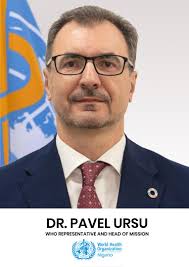
Dr Pavel Ursu,
WHO Nigeria Country Representative and Head of Mission.