Bukola Afeni
The Executive Director Civil Society Legislative Advocacy Centre (CISLAC)/Head of Transparency International in Nigeria (TI-Nigeria), Auwal Ibrahim Musa (Rafsanjani) said Information accessibility in Defence and Security sector is sancroanct to unlocking transparency and accountability in the Defence and Security sector.
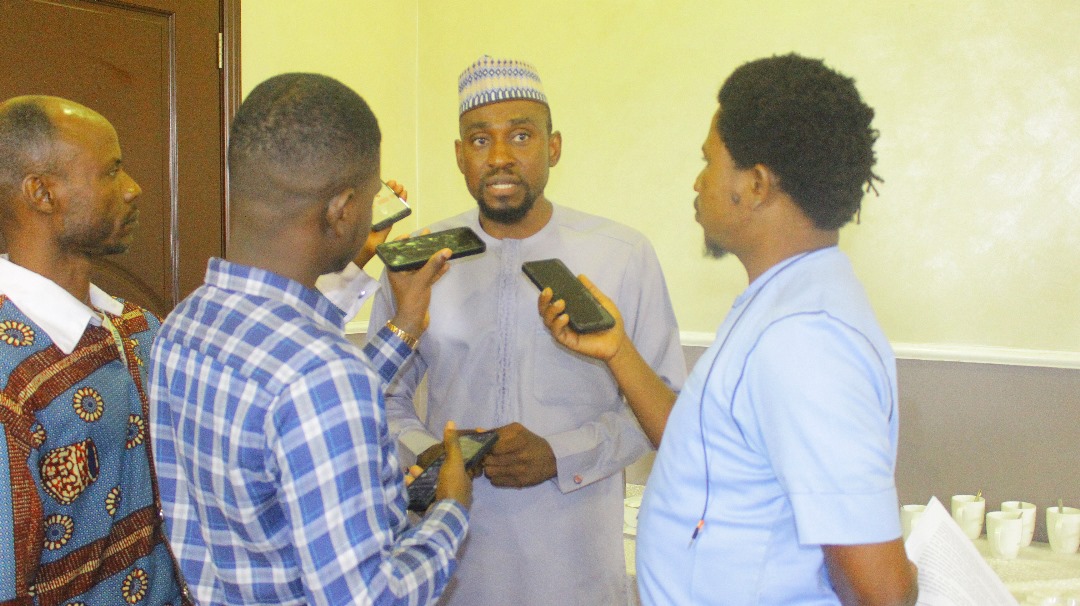
Speaking at a Steering Committee Meeting on Anti-corruption in the Defence and Security Sector held in Enugu, Rafsanjani emphasized the need to end the unchecked culture of exceptionalism that shields the sector from public scrutiny.
The meeting, organized in collaboration with the Transparency International – Defence and Security Program and supported by the Ministry of Foreign Affairs of the Netherlands, aimed to empower members of the Civil Society Steering Committee to drive national and sub-national advocacy for a more accountable and responsive defence and security architecture in Nigeria.Paraphrase
Represented by Abubakar Jimoh, Program Manager (Defence & Security) at CISLAC/TI-Nigeria, Rafsanjani criticized the persistent lack of transparency despite ongoing reforms aimed at improving integrity within the sector.
“Information accessibility in the Defence and Security sector is sacrosanct to unlocking transparency and accountability,” he said.
He pointed out that conflicting legal provisions, such as sections of the Official Secrets Act, the Criminal Code, and the Freedom of Information Act, alongside mandatory oaths of secrecy, significantly impede the disclosure of critical information, thereby weakening external oversight.
Rafsanjani also expressed concern over the absence of an institutionalized mechanism to protect whistle-blowers, especially those exposing corruption within defence agencies.
“ Another major concern is lack of institutionalised strategy to protect information secrecy of whistle-blowers reporting corruption cases coupled with inadequate modern technology to efficiently facilitate accurate information gathering within the Defence and Security agencies; this discourages Whistle-blowing activities.
“It is more disturbing that delayed transparency and accountability of the Security Votes implementation at sub-national levels remains a major challenge to the promotion and realisation of human security in Nigeria, considering the recent growing attacks and killings in various part of Nigeria”, he highlighted.
The Executive director noted that transparency regarding the use of security votes at sub-national levels remains a major challenge, particularly in the face of growing insecurity across Nigeria, including kidnapping, banditry, insurgency, and other violent crimes.
The CISLAC/TI-Nigeria chief lamented the federal government’s lack of commitment to implementing a whistle-blower policy or passing related legislation, warning that continued inaction could undermine anti-corruption efforts in the sector.
“As Nigerian society is a reflection of its security sector, it is critical that all citizens collectively advocate for reforms that enhance accountability and restore public confidence,” Rafsanjani stated.
He called on civil society and the media to intensify efforts in pushing for the passage of comprehensive whistle-blower protection laws and to spotlight neglected high-profile defence corruption cases.