Bukola Afeni
Stakeholders in the health sector have called for stronger political commitment and increased domestic funding to end tuberculosis (TB) in Nigeria.
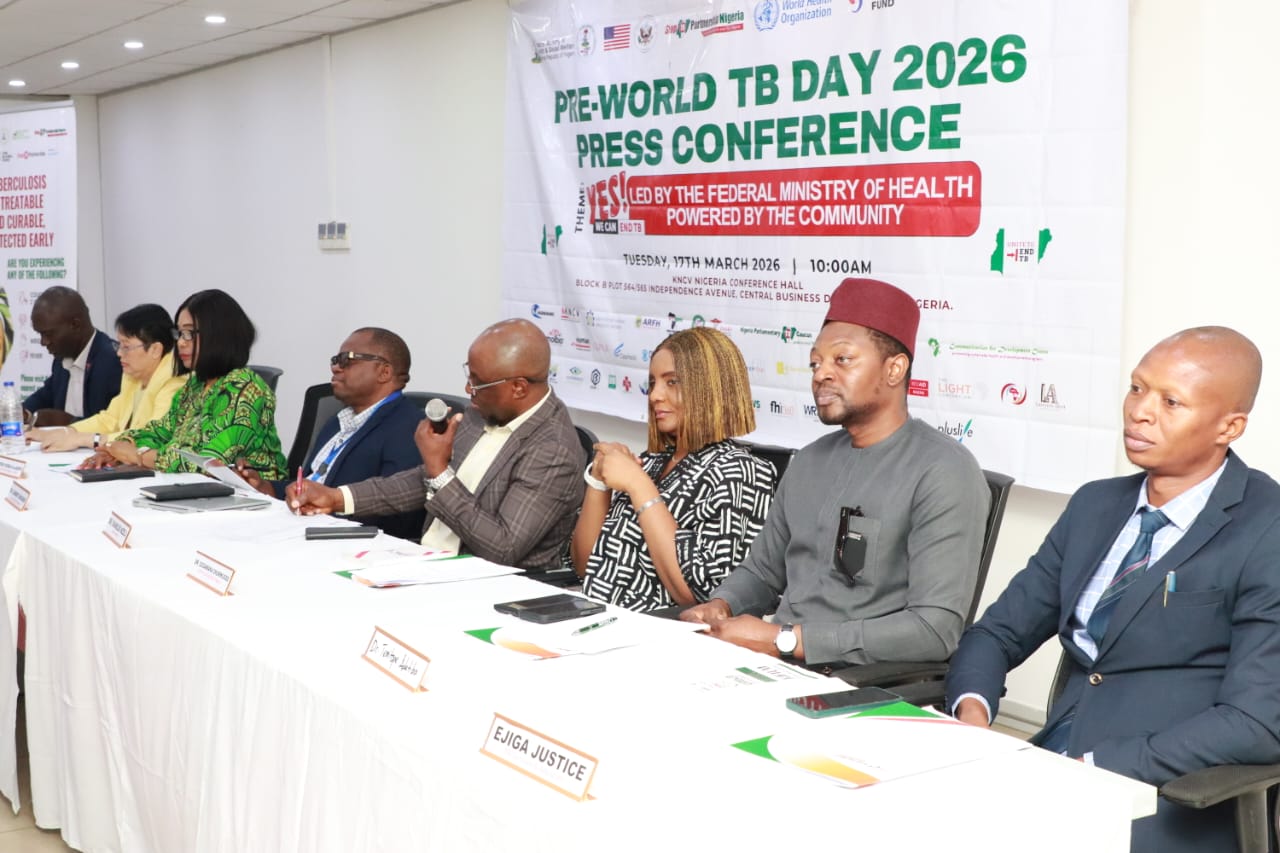
They made the disclosure at the 2026 Pre-World TB Day Press Conference in Abuja.
The experts also called for decisive leadership and coordinated action across health, social protection, and community sectors in the country.
Speaking at the briefing, the WHO Cluster Lead for Disease Prevention and Control in Nigeria, Dr. Mya Ngon, highlighted Nigeria’s progress, noting that the country reported 405,324 TB cases in 2024.
“This is quite significant from 106,533 in 2018, with 335,003 cases recorded in the first three quarters of 2025.”
She further noted that despite progress, undetected cases of TB still remain a concern.
“The number of undetected TB cases averaging 175,000 constitutes a pool of reservoir that fuels ongoing transmission, citing the threat of Multi-Drug-Resistant TB (MDR-TB) and high HIV prevalence.
“71% of TB patients in Nigeria and their households suffer catastrophic costs due to TB.”
The 2026 theme, ‘Yes! We Can End TB: Led by the Federal Ministry of Health, Powered by Communities,’ calls for leadership, sustained investment, and coordinated action across multiple sectors.
To strengthen the national response, WHO outlined strategies including near point-of-care molecular diagnostic tests, simplified tongue-swab sampling, and innovative sputum pooling for early detection.
The health body also highlighted TB vaccine development efforts targeting adolescents and adults, who account for 90% of TB cases, with equitable access as a priority.
“TB is curable and treatable, we implore anyone coughing for two weeks or more to go for a TB test in the nearest health facility.”
The Board Chair of Stop TB Partnership Nigeria, Dr. Queen Ogbuji Ladipo, also called for sustained government leadership and community engagement in terms of TB treatment and prevention. “Ending TB requires strong leadership from government, while communities remain the driving force for awareness, prevention, treatment adherence, and accountability,” she said.
She stressed the need for sustainable domestic financing as donor support declines.
“Sustainable financing from government budgets, private sector contributions, and innovative mechanisms will be critical to sustaining TB programs and ensuring that no Nigerian is left behind.”
Executive Secretary of Stop TB Partnership Nigeria, Mr. Mayowa Joel, emphasized community involvement in the TB response.
“TB survivors, healthcare workers, community leaders, and civil society organisations play vital roles in raising awareness, reducing stigma, identifying people with symptoms, and supporting patients throughout their treatment journey,” he said.
On financing, he warned, “Ending TB should not depend solely on international donors, it must increasingly become a national priority supported by domestic investments and partnerships.”
Justice Ejiga, a TB survivor, praised Nigeria’s efforts in diagnosing and treating TB in children while highlighting the importance of innovation and patient adherence to prevent drug-resistant TB. “If you look at our data, we used to be less than five percent of the target, but today we are already at ten percent. I can’t agree that we are not doing well around TB in children. Of course, we need to do much better,” he said.
Ejiga highlighted technological tools, including portable digital X-rays assisted with AI and WHO-approved algorithms, in TB treatment and prevention.
He also spoke about the nationwide rollout of near point-of-care diagnostic tools.
“Nigeria will roll out over eight thousand of these instruments. Just by taking oral swabs for children, you can also diagnose it.”
On drug-resistant TB, he stressed adherence as key.
“Most drug-resistant cases come from patients not taking treatment as prescribed. The first thing to do is to actually close the gap, and ensure that patients are adherent. That is one of the ways to defeat drug-resistant tuberculosis.”


