Esther Salifu
In commemoration of World Bee Day 2025, the FCT Agro-Climatic Resilience in Semi-Arid Landscapes (ACReSAL) Project, in collaboration with the Forestry Department, has provided a platform to educate the public on the importance of pollinators in maintaining healthy landscapes, supporting climate-smart agriculture, and promoting biodiversity conservation.
The event, held in Abuja on Tuesday, was organized by the FCT Agriculture and Rural Development Secretariat in conjunction with the ACReSAL Project.
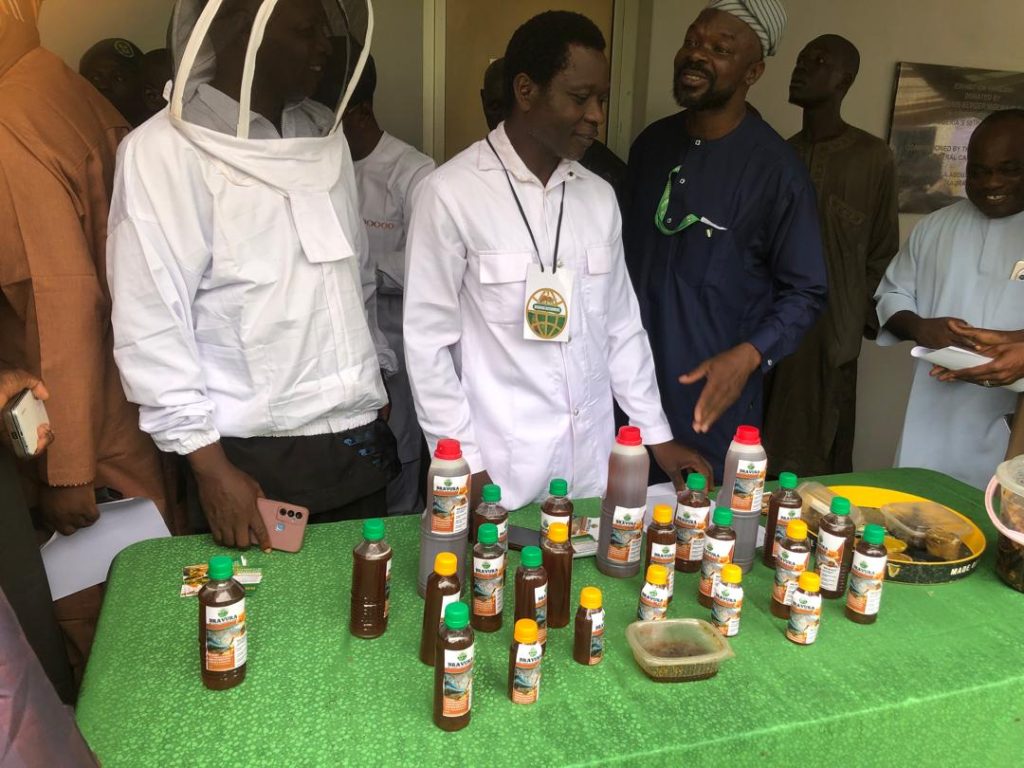
It brought together a diverse group of stakeholders, including bee farmers and students from various schools across the Federal Capital Territory.
Speaking at the occasion, the Project Coordinator of the FCT ACReSAL Project and Director of the Forestry Department, Caroline Opara, expressed pride in the project’s participation in the event.
She noted that bees, and apiculture in general, represent the project’s core vision of sustaining non-timber forest products, conserving biodiversity, and empowering communities.
“We are gathered here today in response to the call by the United Nations to promote beekeeping as a sustainable livelihood and environmental conservation practice,” she said.
Opara emphasized that protecting pollinators helps safeguard forests, mitigate the effects of climate change, and improve livelihoods.
This year’s theme, “Bee Inspired to Nourish Us All,” was described as timely and relevant, encouraging collective efforts to create a supportive environment for bees to thrive. Opara highlighted the growing concern over the rapid decline in bee populations and the serious threat it poses to ecosystems and food security.
To mark the day, she outlined several key initiatives undertaken by FCT ACReSAL.
These include creating awareness about the role of pollinators in climate-smart agriculture, promoting biodiversity conservation in line with ACReSAL’s Component B on community climate resilience, and strengthening stakeholder engagement by fostering collaboration among government agencies, NGOs, traditional institutions, schools, and community-based organizations.
She further noted that the project’s sponsorship of the event demonstrates a commitment to the Sustainable Development Goals, particularly Goal 2 (Zero Hunger), Goal 13 (Climate Action), and Goal 15 (Life on Land).
The initiative also aims to enhance the visibility of the ACReSAL Project and reinforce its impact on local livelihoods and environmental sustainability within the FCT.
In line with these objectives, Opara announced that pollinator-friendly tree seedlings have been procured and will be distributed free of charge to bee farmer cooperatives and members of the public for planting in homes and farmlands.
“Also demo suits (for beekeeping equipment will be distributed to selected schools during the school outreach programme which will commence on Thursday in a bid to catching the attention of our youth, the future guardians of our ecosystem,” she noted.
In his address, the Mandate Secretary of the Agriculture and Rural Development Secretariat, Mr. Abdullahi Suleiman Ango, also underscored the vital role of bees in sustaining life. He explained that beyond their ecological importance, bees and their products such as honey and beeswax are powerful economic tools, especially in forest-rich rural areas.
“A scientific evidence has shown that bees are indispensable to human survival, pollinating over 75% of food crops and supporting the livelihood of millions of farmers and ecosystems,” hsecurity
He pledged to scale up awareness campaigns and expand support to bee farmers and communities.
“Our goal, ultimately, is to promote pollinator-friendly practices that will safeguard bee pollination and, consequently, food security.”
“Honey, beeswax and other by-products represent significant sources of income and employment, particularly in rural communities which are blessed with abundant forest resources.” He stated
Also speaking, the Conservator-General of the National Park Service, Dr. Ibrahim Goni, reaffirmed the agency’s commitment to protecting pollinators.
He described bees as ”critical allies” in the regeneration of forests, savannahs, and wetlands, and assured that the
“The National Park Service views pollinators-including bees-as critical allies in sustaining our protected ecosystems.”
“The National Park Service views pollinators-including bees-as critical allies in sustaining our protected ecosystems,” he said.