Victoria Mbangwa
In a bid to create a more equitable electricity pricing system, the Federal Government has announced plans to restructure electricity tariffs, particularly for Band B and C customers.
The move aims to address the significant gap between different tariff categories and push Distribution Companies (DisCos) to invest more in infrastructure.
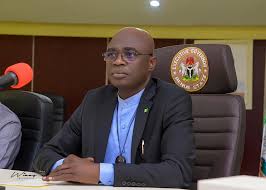
Minister of Power, Adebayo Adelabu, revealed this during the public presentation of the National Integrated Electricity Policy and Nigeria Integrated Resource Plan on Thursday in Abuja.
He criticized DisCos for their reluctance to invest in power infrastructure, which has slowed the migration of customers to Band A—those who receive the most electricity supply.
Currently, Band A customers, who get at least 20 hours of power daily, pay N209 per kilowatt-hour, while Band B users, who receive between 17 to 18 hours, are charged N63 per kilowatt-hour. Adelabu described this pricing disparity as “unfair” and emphasized the need for a tariff structure that ensures a balanced distribution of costs and benefits.
“The gap between the Band A tariffs and Bands B, C, D, and E is just too wide,” he stated. “We believe it’s not fair. It is not just, and we must be able to carry out some level of regularisation.”
While addressing concerns about a potential tariff hike, the minister clarified that the government is not planning an increase but rather a review to improve efficiency and encourage investment.
The migration to Band A should have been faster, but we found out that the DisCos refuse to invest. They have refused to invest in this sector. Adelabu said. “A lot of investment is required for us to achieve an accelerated migration of lower-band customers into Band A. It is taking a lot of time.”
The proposed restructuring aims to create a system where Bands A, B, and C have a more proportional pricing structure, reducing the existing gap. The government hopes this approach will attract more investments and improve electricity supply across the country.