Esther Salifu
Nigeria is taking a bold step towards transforming its agricultural sector with the launch of a national digital soil information system designed to guide farmers on the best ways to manage their land, increase yields, and protect the environment.
The initiative, championed by the Federal Ministry of Agriculture and Food Security (FMAFS) in collaboration with the German development agency GIZ, was unveiled at a high-level workshop in Abuja, where stakeholders committed to forming a Coalition of the Willing (CoW) to drive its implementation.
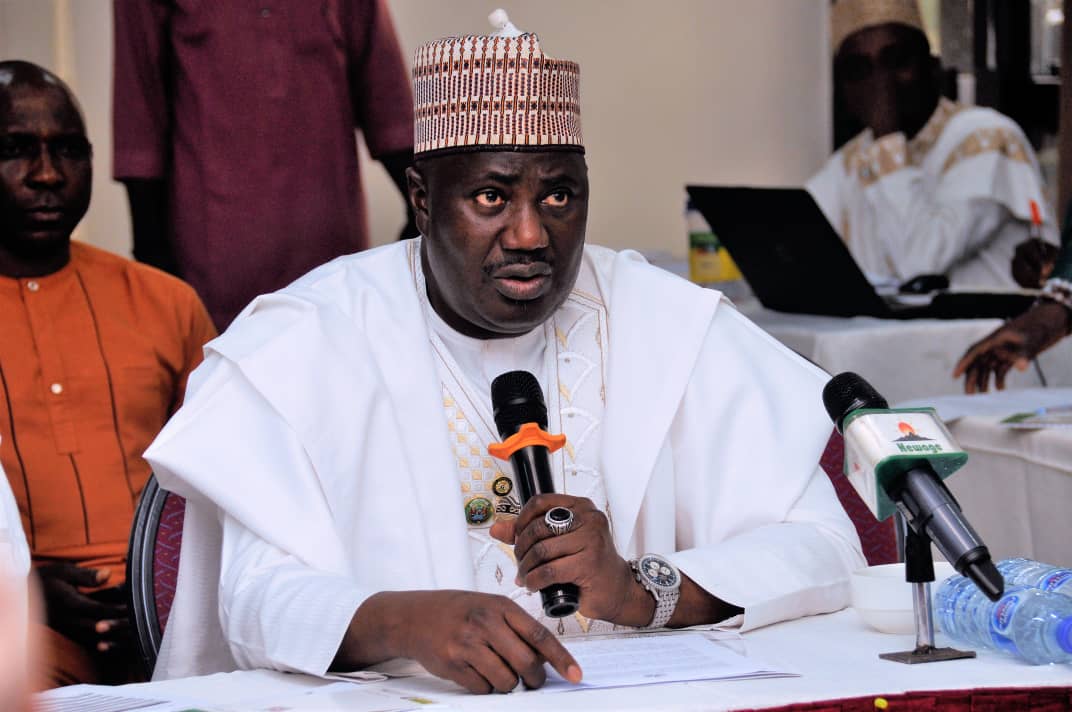
Minister of State for Agriculture and Food Security, Sen. Dr. Aliyu Sabi Abdullahi, described the Nigerian Soil Information System (NSIS) as a “game-changer” for sustainable agriculture. The digital platform will provide real-time, location-specific data on soil types, fertility levels, nutrient content, and management practices, enabling farmers to make informed decisions on crop selection, fertilizer use, and irrigation.
“This system will help to reduce soil and water pollution as well as greenhouse gas emissions,” Abdullahi said.
As part of the programme, the Ministry has introduced the Nigerian Farmers’ Soil Health Scheme (NFSHS), which will offer tailored fertilizer recommendations and establish 774 soil testing laboratories across the country to ensure that even grassroots farmers can access precision soil services.
The move aligns with broader efforts to digitize agriculture, including a Digital Precision Agricultural Extension (E-Extension) Platform that will deliver real-time guidance, market data, and climate-smart techniques to smallholder farmers.
In addition, the government is working with the Nigerian Meteorological Agency (NiMET) to integrate seasonal climate forecasting into farming practices, develop climate-resilient seeds, and expand mechanization under the Renewed Hope Agricultural Mechanization Programme. Special training initiatives will also target youth and women, equipping them with modern agribusiness and financial management skills.
Director of Agricultural Land and Climate Management Services, Mr. Olanipekun Oshaiya, stressed that robust soil data is vital for bridging Nigeria’s nutrient gap, improving food security, and protecting the environment.
“To achieve a comprehensive digitized soil information while the deliverable are healthy soil, food security, and safe environment. It is through robust data that we can bridge the soil nutrient gap and make informed decisions on Nigeria Agriculture and Food System,” he said.
The collaboration between FMAFS and GIZ marks a significant milestone in Nigeria’s shift towards data-driven, environmentally sustainable, and inclusive agriculture.