Bukola Afeni
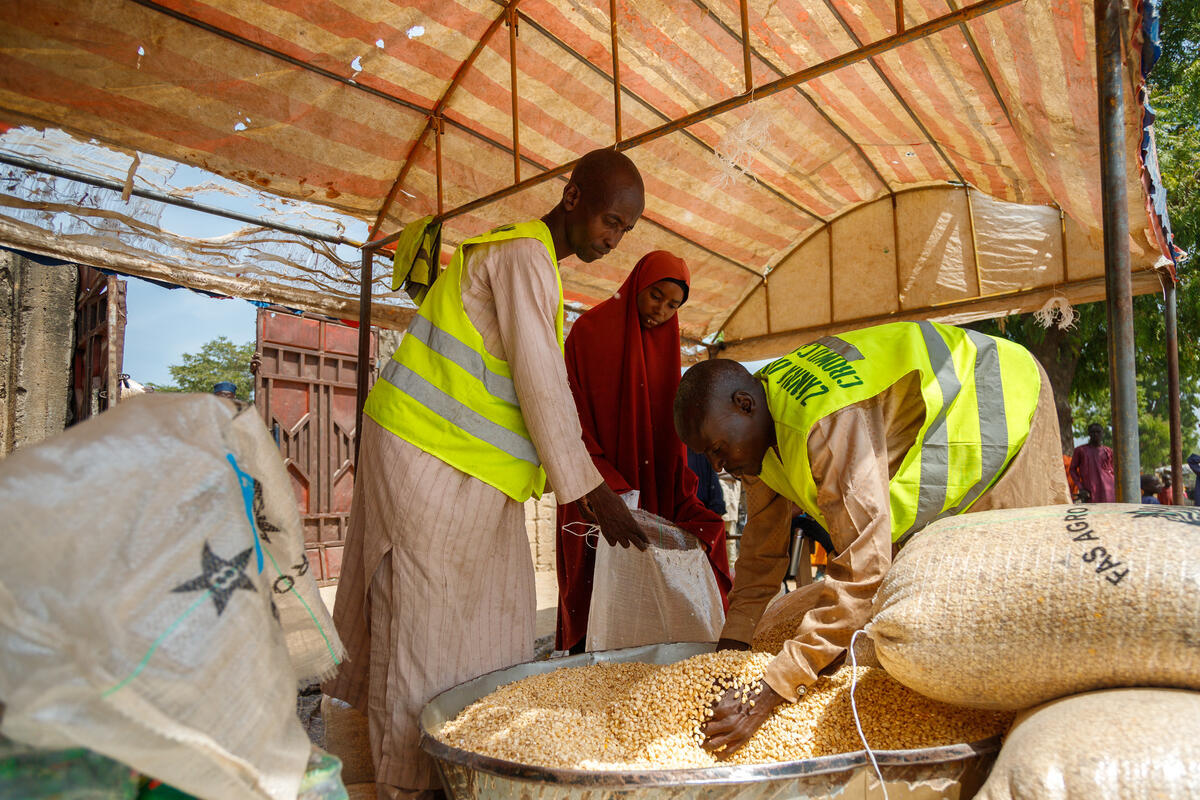
The United Nations World Food Programme (WFP) has warned that critical funding shortfalls could cut off more than one million vulnerable people in the NorthEast part of Nigeria from emergency food and nutrition assistance within weeks.
WFP’s Nigeria Country Director, David Stevenson, said the reduction in aid would have far-reaching humanitarian, security and economic consequences for already displaced and vulnerable populations.
“Now is not the time to stop food assistance. This will lead to catastrophic humanitarian, security and economic consequences for the most vulnerable people who have been forced to flee their homes in search of food and shelter,” Stevenson said.
He added that humanitarian solution remain possible if urgent funding is secured.
The statement revealed that as a result of lack of funds, for the first time in Nigeria, WFP’s assistance will be limited to only 72,000 people.
According to the statement, Nigeria is facing one of the worst hunger crises in recent times.
“Nearly 35 million people are projected to experience acute and severe food insecurity during the 2026 lean season, according to the most recent Cadre Harmonisé – the equivalent of the Integrated Food Security PhaseClassification (IPC) for West and Central Africa.
“Of these, an estimated 15,000 people in Borno State are at risk of catastrophic hunger (IPC Phase 5) – one step away from famine. It’s the worst levels of hunger recorded in a decade,” the statement reads.
WFP has been providing food assistance in northeast Nigeria since 2015, reaching nearly two million women, men, and children in hard hit areas each year. WFP’s work in Nigeria combines emergency assistance with critical support to help communities withstand food shocks and reduce aid dependency over time.
WFP’s home-grown solutions support the local economy by procuring assistance domestically to strengthen value chains and promote self-sufficiency.
However, renewed violence has devastated fragile rural communities, displacing families, destroying food reserves, and accelerating alarming levels of hunger and insecurity. In the past four months alone, 3.5 million people were forced to flee their homes with 80 percent of these located in the country’s north.
Malnutrition rates across several northern states have worsened too, reaching ‘critical’ levels.
Despite generous contributions that sustained WFP’s life-saving aid to the most vulnerable in recent months, those limited resources have now been exhausted.