
By Chukwuemeka Paschal
Mention the Economic Community of West African States and public conversation turns to high stakes political diplomacy, presidential summits, or military interventions in regional hot spots. Far behind those front page headlines, a physical revolution is taking root across West Africa.
Progress is recorded in thousands of kilometers of high voltage transmission lines, sprawling multi lane expressways, and unified digital trading corridors.
Under Category 2 of the sub regional development agenda focusing on Infrastructure, Energy, and Digitalization, the community is executing a massive structural overhaul. The Commission is laying the physical and digital bedrock necessary to run a modern borderless economy.
The West African Power Pool
Industrial expansion across West Africa faced a lingering bottleneck for decades when fragmented national electricity networks forced countries rich in hydroelectric potential to exist as isolated power islands, while their immediate neighbors burned expensive thermal fuels to keep basic utility systems running.
The regional bloc stepped in to break this deadlock by creating the West African Power Pool, a specialized arm chartered to weave separate national grids into a single open electricity market.
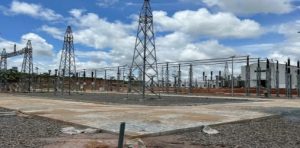
Industrial operators and national utilities are already seeing the rewards of this unified grid. Flagship interconnector lines like the project tying together Cote d Ivoire, Liberia, Sierra Leone, and Guinea, alongside broader regional interlinks, are systematically phasing out heavy reliance on private industrial generators.
“In 2022, we used generators for only 70 hours across the five Sodefitex factories, but in 2023 we have not had to turn on a single generator”, noted Sadio Seye, Director of Operations at Sodefitex in Tambacounda during an official World Bank field assessment on November 23, 2023.
He added that access to reliable grid power was a source of pride and relief because the company was preparing to ask its Board of Directors for a big cash investment to purchase new generators.

“This cross border energy exchange changes the economic reality for entire communities. This project goes beyond power lines because it is about families switching on lights for the first time, clinics where electricity powers life saving equipment, and an investment in human dignity”, stated Engr. Sule Ahmed Abdulaziz, Managing Director of the Transmission Company of Nigeria and Chairman of the West African Power Pool Board of Directors at the 6th Donors Joint Supervision Meeting held at the Transcorp Hilton in Abuja on October 27, 2025.
The Abidjan to Lagos Corridor
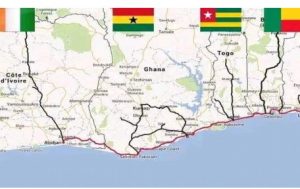
Power supplies the energy for factories, but transport arteries carry the finished goods to consumers. The undisputed engine room of West African commerce is the Abidjan to Lagos Highway Corridor Project, a fifteen billion dollar supranational highway venture steered under a regional framework alongside the African Development Bank.
This six lane coastal artery stretches across 1,028 kilometers, linking five economic heavyweights including Cote d Ivoire, Ghana, Togo, Benin, and Nigeria. Over sixty five percent of all commercial activity in the regional bloc moves along this single strip, which connects major deep water seaports, industrial estates, and urban markets housing more than forty million consumers.
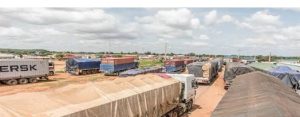
Truck drivers and logistics firms navigating this coastline traditionally ran into endless paperwork, conflicting weighbridge regulations, and multi day border queues. The community is dismantling these barriers by constructing Joint Border Posts, starting with facilities like the Seme Krake station operating between Nigeria and Benin, aimed at creating single window digital customs clearances.
“Hardware alone cannot guarantee smooth transit. Without interconnectivity, this is not a joint border post, it is two border posts sharing a car park”, observed Bashir Adewale Adeniyi, Comptroller General of the Nigeria Customs Service during joint customs bilateral proceedings with the Benin Customs Directorate at the Seme border in September 2026.
Building the Single Digital Market
Alongside paved highways and transmission towers, the Commission is building an invisible digital nervous system. Regional telecom policies and data sharing agreements are steadily pushing the bloc toward an integrated digital market.
Twelve major high speed submarine fiber optic cables now make landfall along the coastline, piping heavy data capacity into interior markets. Eighteen Internet Exchange Points and forty regional data centers support this landing capacity, keeping local internet traffic circulating within the sub region instead of routing through expensive overseas servers.
Regional regulations target high cross border mobile surcharges. Capped roaming fees allow market traders, logistics handlers, and long haul transport drivers to conduct mobile money transfers and manage orders across borders without changing SIM cards or paying high international tariffs.
At the institutional level, the rollout of the Regional Energy Governance and Information System delivers a central data platform. The platform tracks power trends, transmission health, and regulatory compliance across member nations in real time.
The Integration Imperative
Political headlines will always swing with changing diplomatic winds, but steel, concrete, and fiber optics create lasting union. A processing plant drawing power from a regional hydro grid, hauling its freight along a multinational expressway, and collecting payments over borderless mobile networks shows what regional integration looks like in practice.
Real regional unity is not born inside conference halls or signed on official parchment. It is built quietly along high voltage power lines, concrete roadbeds, and undersea cable landings that tie everyday commerce together across West African borders.


