Bukola Afeni
The Director General of the National Information Technology Development Agency (NITDA), Kashifu Inuwa Abdullahi, said Nigeria is charting an ambitious path toward a sustainable digital future anchored on innovation, inclusivity, and resilience.
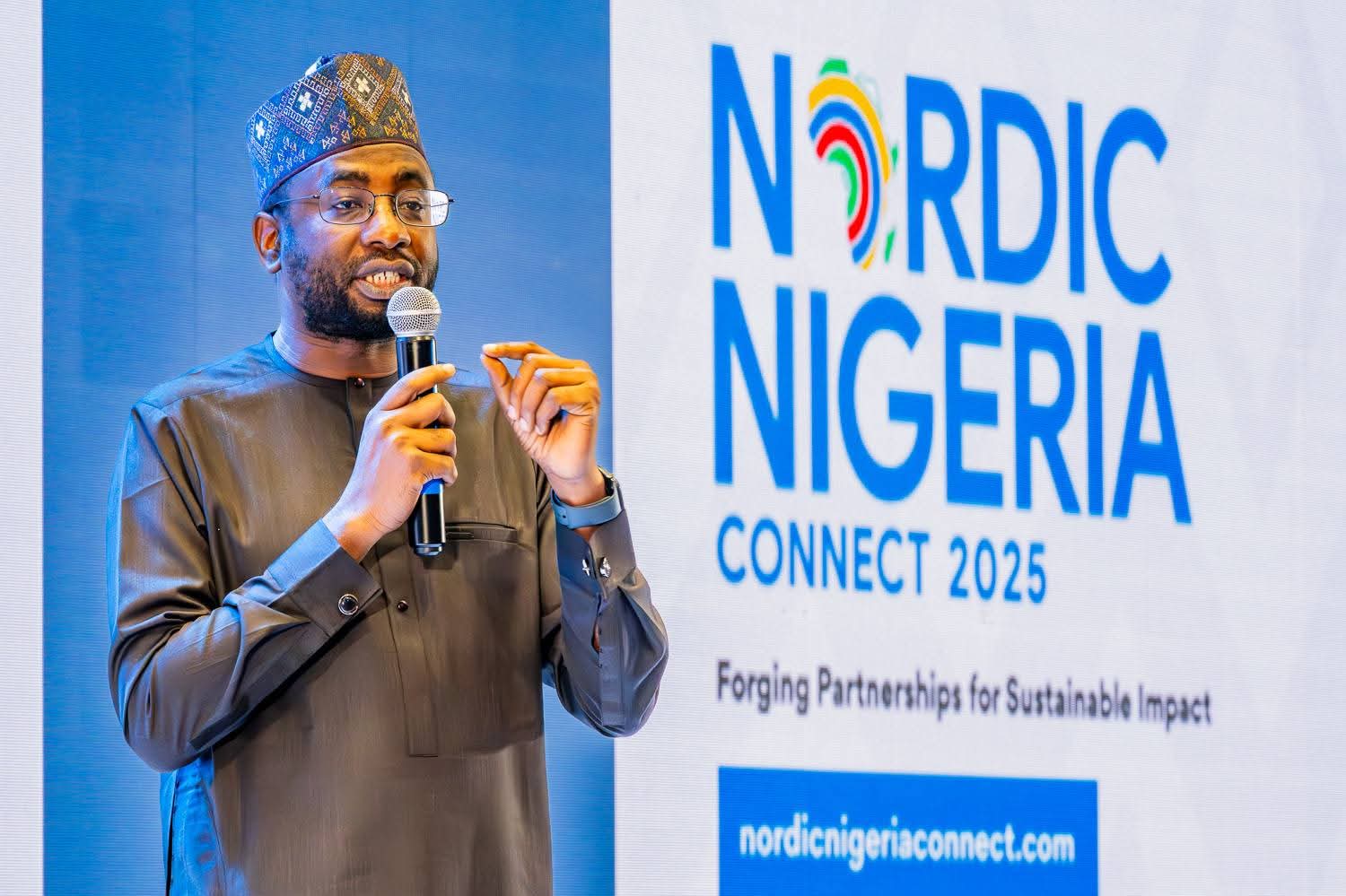
Inuwa stated this while delivering a keynote address at the Nordic-Nigeria Connect 2025 conference held in Lagos.
He emphasized that the vision aligns with President Bola Ahmed Tinubu’s Renewed Hope Agenda, which is focused on economic reform, infrastructure enhancement, and digital-driven diversification.
Speaking on the theme “Nigeria’s Digital Infrastructure Ambition and Path to Sustainability,” Inuwa noted that the country’s digital ambition goes beyond building data centers or laying fiber cables.
” Instead, it aims to create “a new societal fabric and economic operating system” founded on inclusivity, security, and digital prosperity.”
He explained that Nigeria’s digital vision rests on two key components the Shared Digital Backbone and the Operational Backbone.
“The Shared Digital Backbone represents the hardware layer including terrestrial fiber optics, subsea cables, green data centers, and sovereign cloud services that secure Nigeria’s data and ensure digital sovereignty.
“The Operational Backbone, which forms the software layer, refers to Nigeria’s Digital Public Infrastructure (DPI) a suite of interoperable systems that include digital identity, payment frameworks, and secure data exchange platforms.
“Together, they create a unified national digital ecosystem that empowers startups to develop homegrown solutions tailored to Nigeria’s unique socio-economic context,” Inuwa stated.
He said the former includes physical infrastructure like fiber optics, data centers, and sovereign cloud services, the latter represents the Digital Public Infrastructure (DPI) comprising digital identity, payment frameworks, and data exchange platforms that support a unified digital ecosystem.
Citing the recent global Amazon Web Services (AWS) outage, Inuwa underscored the need for digital independence and self-determination, stressing that “relying solely on foreign cloud regions does not ensure business continuity.”
Outlining Nigeria’s digital sustainability strategy, he identified three pillars: Policy, People, and Partnerships.
He said the government is implementing pro-innovation policies such as the Nigeria Startup Act and Data Protection Act, while initiatives like the 3 Million Technical Talent (3MTT) Programme and National Digital Literacy Framework aims to build local capacity.
Inuwa revealed several major projects that are transforming this ambition into action.
He said: “On infrastructure, the Project BRIDGE initiative is expanding Nigeria’s terrestrial fibre network to 125,000 kilometres through public-private partnerships, while the National Sovereign Cloud Initiative is fostering a competitive data storage ecosystem within Nigerian jurisdiction.
“On the software side, the Nigeria Stack is driving nationwide digital identity, payments, and data exchange systems, while the OneGOV platform will unify all government services under a single digital window.”
“We are driving homegrown innovation through projects like the AI Collective and N-ATLAS, the country’s indigenous large language model.
Inuwa called for stronger collaboration within Nigeria’s digital ecosystem and deeper international partnerships, particularly with the Nordic region, to harness shared strengths in innovation and technology.
“With clear vision, deliberate strategy, and inclusive policy frameworks, we are confident that Nigeria will not only achieve digital sustainability we will lead Africa’s digital transformation,” he declared.