Victoria Ogunrinde
The World Health Organisation (WHO) has charged the Federal Government to leverage on the strengths and opportunities on each tier of government to come up with feasible, less complex and sustainable strategies that will work for the Federal and State Governments in overcoming challenges under the Health Sector Renewal Investment Program.
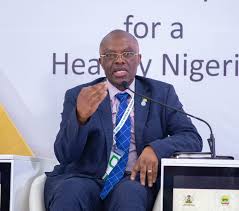
Speaking at the 64th National Council on Health in Ado-Ekiti, WHO Representative in Nigeria, Dr. Walter Kazadi Mulombo stated that with the burden of out-of-pocket expenditure on health which is the highest in the region, a growing burden of non-communicable diseases on the background of high burden of communicable diseases, high maternal and childhood mortality rates, an unpredictable landscape in terms of multiple health emergencies, and a growing population, the health sector in Nigeria certainly requires an uncommon reform thus the charge.
Dr. Mulombo while appreciating that Nigeria has prioritized primary healthcare and health financing as accelerators towards achieving UHC and the SDGs noted that the theme for the 64th NCH “Building Resilience and Inclusive Healthcare System for a Healthy Nigeria” is very appropriate as they focus on the critical issues in the Health sector.
“The sub-themes of this 64th NCH are very appropriate as they focus on the critical issues of health workforce, evidence-based research and development, health systems governance and access towards Universal Health Coverage (UHC), digital transformation in health, and innovative financing”, He said.
“Let me suggest what can be done differently. As the NCH is the highest health decision-making body in Nigeria, it will be useful to explore innovative approaches towards engagement of the Federal Ministry of Health and the States in between councils towards improved performance and tracking implementation of council resolutions. The business of health is the business of all” Dr Mulombo added.
The country’s representative reiterated the commitment of WHO towards providing technical support as a member State Organisation towards the healthcare needs of the country.