Victoria Mbangwa
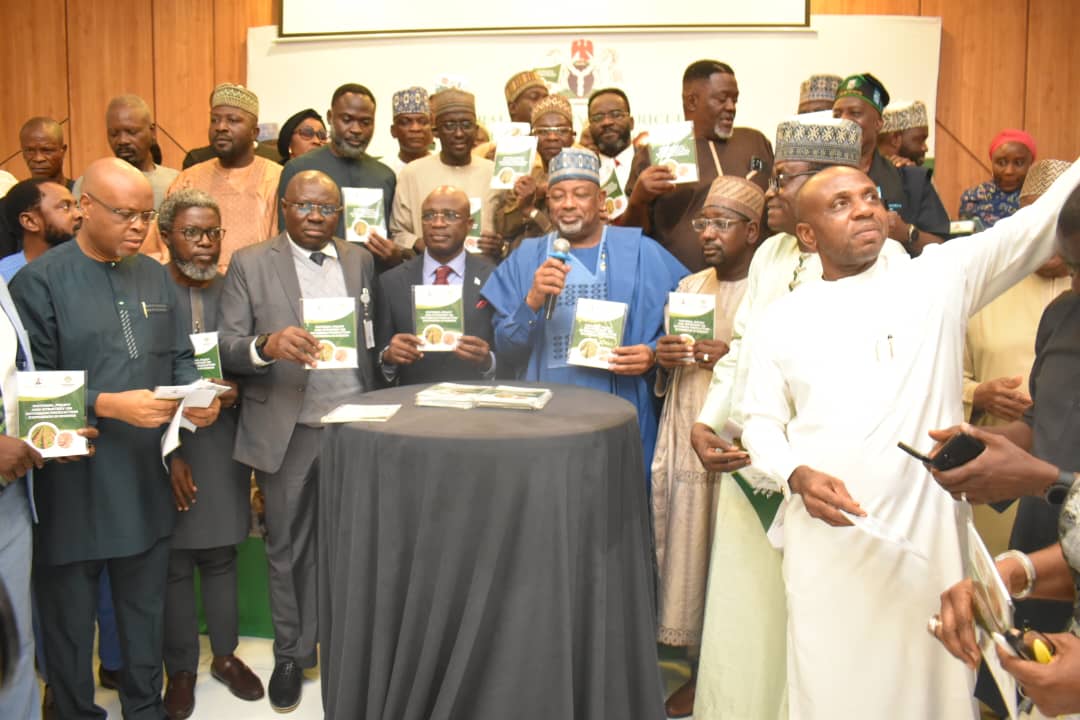
In a bold move to unlock the economic potential of one of Nigeria’s most underutilized crops, the Federal Government has launched the National Soybean Production Policy and Strategy, aimed at transforming soybeans into a strategic commodity for food security, industrial growth, and export revenue.
The initiative, unveiled in Abuja, is expected to create over one million jobs across 22 states and the Federal Capital Territory and generate a projected ₦3.9 trillion in annual revenue, according to Benue State Governor, Rev. Father Hyacinth Alia.
At the heart of the policy is an ambitious goal: cultivate one million hectares of soybean farmland and deliver 460,000 metric tons of soybean grain to the Nigerian market within two years. The plan not only addresses a massive national supply gap but aims to place Nigeria on the global map as a key player in the soybean industry.
Speaking at the event, Minister of Agriculture and Food Security, Senator Abubakar Kyari, said the initiative aligns with President Bola Ahmed Tinubu’s Renewed Hope Agenda and marks a decisive shift toward food sovereignty and economic diversification.
“Food security is not merely an aspiration but an urgent mission,” said Kyari. “Nigeria currently produces approximately 1.35 million tons of soybeans annually, yet our national demand surpasses 2.7million metric tons, fueled by the growing food, feed, and industrial sectors”.
Kyari emphasized the nutritional and economic value of soybean, describing it as both a “super crop” and an industrial asset. With nearly 40% protein content and essential amino acids, soybean is key to improving household nutrition and combating malnutrition in the country.
He also noted that Nigeria’s soybeans are naturally non-GMO, giving them a competitive edge in the international market. Beyond raw grains, Nigeria stands to benefit from a growing market for value-added soybean products like oil, flour, tofu, and protein isolates.
Soybean’s importance also lies in its domestic use about one-third of production goes into animal feed, particularly in the poultry industry, where it forms 20–25% of feed content.
The event also marked the official launch of the Nigerian Soybean Partnership, a collaborative platform bringing together federal and state governments, private sector players, farmer cooperatives, and development partners. A Memorandum of Understanding (MoU) was signed between the Dantata Group and the Benue State Government to kickstart implementation.
Benue State, Nigeria’s leading soybean producer, is expected to play a pivotal role. Governor Alia noted that since the introduction of the Malayan soybean variety in 1937, the state’s Guinea Savanna has made it the “linchpin” of Nigeria’s soybean economy.
Permanent Secretary of the Ministry, Dr. Marcus Ogunbiyi, underscored the policy’s strategic importance for national food security and praised development partners for their dedication to strengthening the soybean value chain.
Present at the event were commissioners of agriculture from various states, representatives from Commodity Development Initiative (CDi), Nigeria Soybean Partnership, Expera Global Cooperation, and the National Agricultural Development Fund.
As Nigeria pushes to close its production gap and increase exports, experts say the success of this strategy could serve as a model for how the country can transform agriculture from subsistence to a major economic engine.