Bukola Afeni
Nigeria has confirmed one imported case of Ebola Bundibugyo virus disease in the Federal Capital Territory (FCT).
The confirmation makes Nigeria the fifth country to detect the virus since an outbreak was declared in the Democratic Republic of the Congo (DRC) on May 15, 2026.
The Federal Ministry of Health and Social Welfare in a statement on Monday, said the patient is a woman with recent travel history to Uganda.
According to the ministry, her symptoms began on October 7, four days after her arrival in Nigeria.
“She sought care at a private health facility in Abuja on October 11. Laboratory test confirmed Bundibugyo virus on October 20.”
“The patient is currently in isolation and receiving medical care, while investigations are ongoing to establish the likely source of infection and reconstruct her full travel and exposure history.”
“The ministry said 44 contacts have so far been identified and are being monitored as efforts are intensified to find other people who may have been exposed.”
According to the health authority, infection prevention and control measures are being ramped up in the private health facility where the patient sought care.
Meanwhile, the Nigeria Centre for Disease Control and Prevention (NCDC) has activated its incident management system to coordinate response.
The NCDC noted that rapid identification of cases, timely follow-up of contacts and effective infection prevention and control are critical to contain the spread.
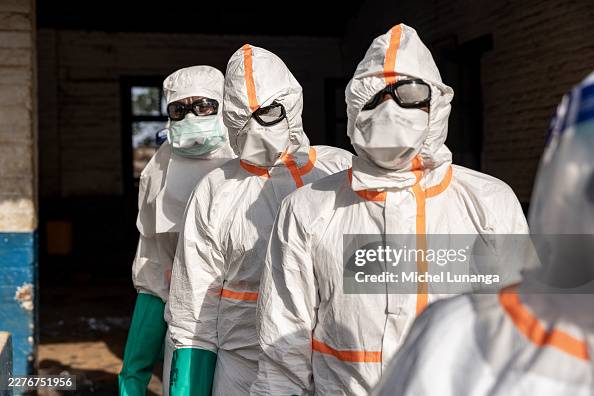
The World Health Organization (WHO) and partners are working closely with health authorities to strengthen control measures, including case investigation, contact tracing, infection prevention and control, and provision of essential supplies including personal protective equipment for health workers.
WHO has urged all countries in the region to sustain a high level of readiness as the outbreak in the DRC continues to evolve.
The organization disclosed that Kenya has reported nine cases linked to an imported case in recent weeks.
WHO advised countries to maintain strong disease surveillance and rapid alert investigation, ensure laboratories can safely test suspected cases, keep rapid response and clinical teams ready for immediate activation, and reinforce infection prevention and control in both public and private health facilities.
The body also called for pre-positioning of essential supplies, active engagement with communities, and heightened monitoring at points of entry with response plans in place.
According to WHO, sustained readiness is essential to detect cases early, prevent onward transmission and protect health workers and communities.
The organization however, advises against any restriction of travel to, or trade with, affected countries, noting that it continues to closely monitor and, where necessary, verify travel and trade measures in relation to the event, while risk assessment is being regularly reassessed.