Wunmi Semudara
The World Food Programme (WFP) is scaling up its operations to assist 2.1 million people with emergency food and nutrition supplies.
The United Nations Children’s Fund (UNICEF) and nutrition partners aim to provide life-saving nutrition services to over one million malnourished children, as well as pregnant and breastfeeding women.
The Food and Agriculture Organization (FAO) plans to reach two million people with seed packages to secure cereal production for the upcoming harvest.
The Country Representative of UNICEF in Nigeria, Ms. Cristian Munduate, called for concerted efforts to protect children, saying that “We have the power to make a difference in the lives of these children. With your support, we can prevent more children from suffering from malnutrition and give them a chance at a healthy and happy future,”
This is in response to the plea for a sum of US$396 million urgently needed to scale up humanitarian action in order to prevent widespread hunger and malnutrition crisis ranging in the north-east Nigeria from blowing into full catastrophe especially in Borno Adamawa and Yobe Dates (BAY).
The United Nations in collaboration with some group of Non Governmental Organization had appeal for this sum through a published press statement while explaining that more than half a million people may face emergency levels of food insecurity, with extremely high rates of acute malnutrition and cases of mortality if there is no rapid and significant scale up of humanitarian assistance.
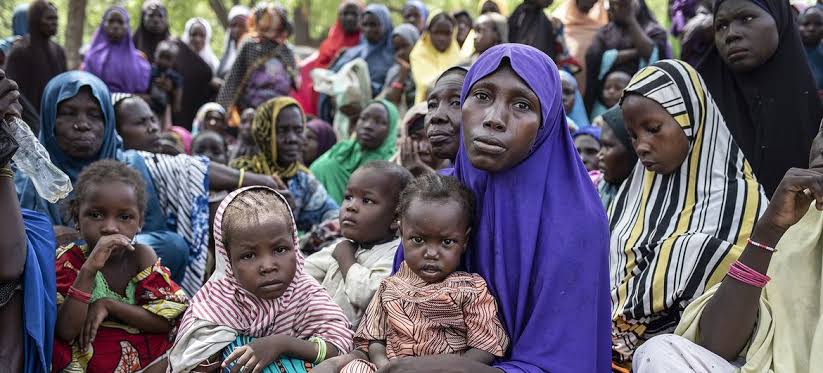
According to the report from the group, an estimated 2 million children under five in the three states are likely to face wasting this year.
“This is the most immediate and life-threatening form of malnutrition. Some 700,000 children are at risk of severe acute malnutrition – meaning that they are 11 times more likely to die compared to well-nourished children. They need immediate action to survive.
“The deepening food crisis and worrying malnutrition levels are the result of years of protracted conflict and insecurity which continue to prevent more than 2 million people from returning home. A combination of fuel and food inflation, a naira cash crisis earlier in the year, and climate shocks (such as the record floods in Nigeria in 2022) are among factors that have worsened the crisis.” The report read.
Mr. Matthias Schmale, the Humanitarian Coordinator for Nigeria. lamented the situation in the northern region of the country, he said “I have seen firsthand the anguish of mothers fighting for the lives of their malnourished infants in our partner-run stabilization centres. This is a situation no one should have to face, I have spoken with children who described going for days without eating enough. Mothers who said their children go to bed crying from hunger. Families struggling to feed their families as they have gone for months without receiving food assistance.”
He said this might result in unfortunate reality for millions of food-insecure people in the BAY states unless resources and funding are urgently mobilized.
“If additional funding is not received, humanitarian partners will only reach about 300,000 of the 4.3 million at-risk people in need of food assistance during the peak of the lean season. As more people in urgent need of food aid go unassisted, there will be an increased risk of starvation and death.”
“While we continue to work together to stave off catastrophe, the sheer scale of the food and nutrition crisis means that humanitarian assistance is critical right now,” said Mr. David Stevenson, the Country Representative and Country Director of WFP in Nigeria.
The FAO representative to Nigeria, Mr. Fred Kafeero, warned that the upcoming lean season may worsen food insecurity among vulnerable households without access to agricultural livelihood options. “FAO requires funding to reach 2 million people with urgent food and livelihood assistance in the form of critical production inputs such as seeds, fertilizers, and livelihood assets including small ruminants and poultry, and the corresponding skills to save lives, and protect and rebuild livelihoods,” he said.
With the lean season coinciding with the rainy season, humanitarian partners are also concerned about outbreaks of diseases, such as acute watery diarrhoea, cholera and malaria, which will only aggravate the situation of malnourished children. Children suffering from malnutrition are at higher risk of dying from common infections.
The US$396 million in funding will enable humanitarian organizations to swiftly expand food and nutrition assistance, along with supplementary interventions such as clean water and sanitation, healthcare, protection and logistics in the BAY states.
To kickstart the response to the food security and nutrition crisis in north-east Nigeria, the UN has released a combined $18 million. UN Emergency Relief Coordinator, Mr. Martin Griffiths, has allocated $9 million from the Central Emergency Response Fund (CERF) and Humanitarian Coordinator Schmale will be disbursing a further $9 million from the Nigeria Humanitarian Fund (NHF).
“These CERF and NHF funds, however, account for less than five per cent of what humanitarian organizations require to address the most urgent food and nutrition needs. Significant additional and early funding is urgently needed,” said Mr. Schmale. “As we have seen in previous years, early funding can help pull food insecure people back from the brink.”